What Makes El Cielo Special In Cozumel? The Starfish, The Stingrays And Whether It Is Worth The Boat Ride
A white sandbar in water shallow enough to stand in, with big orange sea stars scattered across the bottom and rays resting in the sand. Here is what is really down there, the rules that protect it, and which boat gets you there on the terms you want.
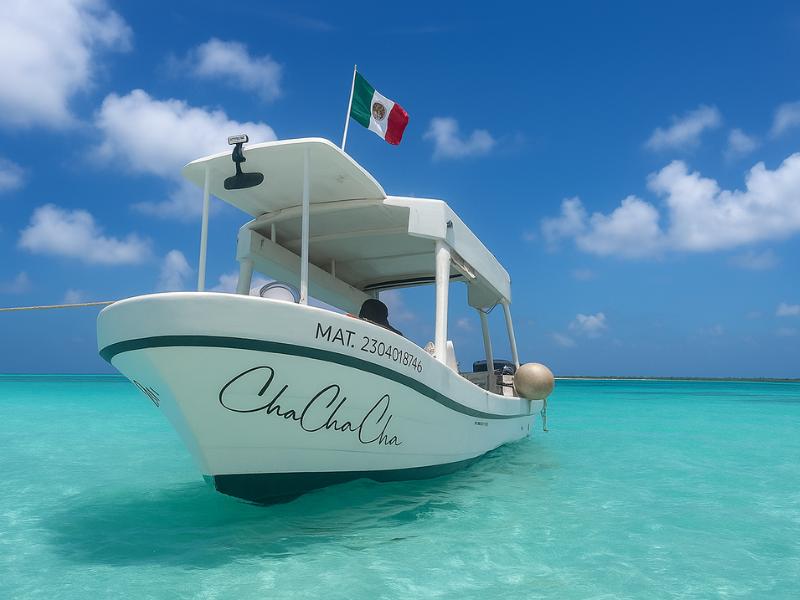
The boat slows, the engine drops to a murmur, and the water under the hull turns from deep blue to a pale, almost glowing turquoise. Below, on white sand a few feet down, orange shapes the size of dinner plates sit scattered across the bottom. That is the first look most people get at El Cielo, and it is why our team at Cozumel Snorkeling Tours gets asked about this one stop more than any single reef on the island. The name means "heaven" in Spanish. The question people really want answered is whether the reality lives up to the photos, and whether it is worth building a morning around.
The short answer is yes for most people, with a few conditions. El Cielo is special for reasons that have little to do with coral: shallow, sheltered water, a resident population of large sea stars and wild stingrays resting in the sand, all inside a protected national park. What follows covers what is down there, the rules that keep it that way, when the water is at its best, and how the tours that stop there compare on price, length and privacy.
What Is El Cielo, And Where Exactly Is It?
El Cielo is a shallow sandbar off Cozumel's southwest coast, on the sheltered leeward side of the island, inside the Cozumel reefs national park. Water over it is typically 2 to 6 feet deep, and its white sand bottom holds a resident population of cushion sea stars. CONANP lists El Cielo beach among the park's main attractions.
The location explains most of what makes it work. The southwest coast faces away from the prevailing easterly and northeasterly swell and wind, so the water over the sandbar tends to stay calmer and shallower than the open sites. Calm, shallow and sandy is exactly the habitat the sea stars and rays favor.
It is also a protected site. El Cielo sits within Parque Nacional Arrecifes de Cozumel, and the official CONANP page for the park names "la playa 'El Cielo'" alongside the coral reefs and the C-53 wreck as its attractions. That status is why there are rules about touching, why boats are managed, and why you pay a park fee to be there.
| El Cielo at a glance | What the research shows |
|---|---|
| Where | Southwest coast of Cozumel, on the sheltered leeward side |
| Protection | Inside Parque Nacional Arrecifes de Cozumel, managed by CONANP |
| Water depth | Typically 2 to 6 feet, often waist to chest deep for adults, varying with tide and exact spot |
| Bottom | White sand with seagrass nearby; deeper water around the edges |
| Signature animals | Cushion sea stars and southern stingrays |
| Time spent there on a tour | Usually 45 to 60 minutes or more |
| Typical trip | Part of a half-day boat tour of about 4 hours, with reef stops |
| Best conditions | December to April for calmer seas; mornings before about 11 AM |
| Access | By boat only, on CONANP-authorized tours and charters |
You will not get to El Cielo on foot or from a beach club. Every option is a boat, and most visitors see it as one stop in a half-day trip that also takes in the reefs. The three trips below all include it in a 4-hour morning at a per-person price.
Cozumel Snorkeling Tours That Fit This Trip
Booked through the operators' own listings, with live prices and cancellation terms shown there.
What Makes El Cielo Different From Cozumel's Reefs?
Cozumel's reefs are about coral walls, gardens and fish in deeper, moving water. El Cielo is the opposite: a bright, shallow, sandy flat where the draw is large animals resting on the bottom close to the surface. It is gentler, easier to stand in, and much less about coral. Most tours pair the two.
That contrast is the reason El Cielo works so well as the third or fourth stop of a morning. You spend the first part of the trip over Palancar or Columbia, looking down at coral formations and schools of fish, then finish somewhere you can float without effort and see big animals clearly on pale sand.
| Feature | El Cielo sandbar | Offshore reefs such as Palancar and Columbia |
|---|---|---|
| Bottom | White sand with seagrass | Coral formations, gardens and walls |
| Depth | Typically 2 to 6 feet; you can often stand in the shallowest parts | Deeper; you float over the reef and do not stand |
| Main attraction | Cushion sea stars and resting stingrays | Coral, reef fish, turtles, eagle rays |
| Feel in the water | Calm and sheltered in normal conditions | More exposed, with more movement |
| Skill needed | Very little; good for beginners in a vest | Basic snorkeling comfort, guide recommended |
| How visitors get there | Boat only | Boat only |
If your group is mixed, this is useful. A confident snorkeler gets the reef stops, and someone less sure of the water can sit out a reef and still have a proper swim at El Cielo. We cover which species show up where in our guide to marine life you can see in Cozumel, and the famous reefs themselves in our rundown of the best snorkeling spots on the island.
What El Cielo is not is a coral reef. People who come expecting coral gardens in the shallows sometimes find it a little bare at first. The magic is the clarity, the light on the sand and the animals, not the structure.
What Kind Of Starfish Live At El Cielo?
The sea stars at El Cielo are cushion sea stars, Oreaster reticulatus, also called red or orange cushion sea stars or West Indian sea stars. They are the resident population on the sandy bottom, orange or red to brown in color, and large, with individuals reaching about a foot or more across. Tour listings describe hundreds of them.
The size is what catches people off guard. These are not the small, thin-armed starfish of rock pools. A cushion sea star is thick and heavy looking, with a raised, knobbly body and short arms, and seen through clear water on white sand they look almost too bright to be real.
"Resident" matters here. The sea stars live on the sandbar. They are not placed there for visitors, and they are not fed. They move slowly across the sand, which is why the exact spots where they cluster shift, and why no honest operator will promise you a count. On the tours we list, guests consistently name the starfish at El Cielo as a highlight, and the listings themselves describe hundreds on the bottom.
A private boat makes it easy to linger at this stop. The El Cielo private tour lets your group pick the combination of stops, and its itinerary allows about 45 to 60 minutes at El Cielo or El Cielito, with park fees included in the price.
Can You Touch Or Pick Up The Starfish At El Cielo?
No. Do not lift, touch, move or remove the sea stars, not even for a moment for a photo. They breathe through their skin using seawater, and air exposure damages their tissue and can kill them. Disturbing marine wildlife is prohibited under the park's rules, and operators enforce a no-touch policy at the sandbar.
This is the question that matters most at El Cielo, because the temptation is real. The water is shallow, the animals are right there, and there are years of vacation photos online showing someone holding a sea star up to the camera. Those photos are the problem.
Cushion sea stars take in oxygen through their skin, through small structures called papulae, and they need seawater to do it. Lift one out, even briefly, and the air exposure damages those tissues. Do it repeatedly across thousands of visitors a season and the population takes the hit. The research we gathered is consistent on this across operator guidance and marine park material, and it is why the rule is simple: leave them on the sand.
The legal side lines up with the biology. CONANP's visitor rules for the park include "No perturbar a la fauna marina", do not disturb marine wildlife, alongside the rules against feeding animals and touching the reefs. Our guide to the Cozumel marine park rules and fee lists all nine.
- Look, do not lift. Float above the sea star and photograph it where it lies. The clear water and white sand make it an easy shot.
- Watch your feet. In the shallowest parts it is tempting to stand. If you do, look first, so you do not put a foot on a sea star or a resting ray.
- Keep hands to yourself. Even a gentle prod or a flip to see the underside counts as disturbing wildlife.
- Follow the guide. Crews at El Cielo know where the animals are and will show you, from a distance that keeps everyone within the rules.
Nobody on the boat will think less of you for asking. The guides would much rather answer a question than call someone back.
Are The Stingrays At El Cielo Wild, And Are They Safe To Swim Near?
They are wild southern stingrays, Hypanus americanus, that rest naturally on the sandy bottom. Tours do not feed or bait them. They are bottom foragers that often lie partly buried in sand, and they are calm around snorkelers who give them space. The park rules say not to feed or disturb them, so watch from above.
The species is the southern stingray, formerly classed as Dasyatis americana. It is a flat, diamond-shaped ray that spends much of its time on sand and seagrass, feeding on animals buried in the bottom. The Florida Museum's southern stingray profile has a good species overview if you want to know more before you go.
The key word is wild. At some Caribbean ray sites, animals are fed by tour boats and crowd around people. The research we gathered describes El Cielo differently: the rays there rest naturally, and tours do not feed or bait them. Feeding wildlife is banned anywhere in the park anyway.
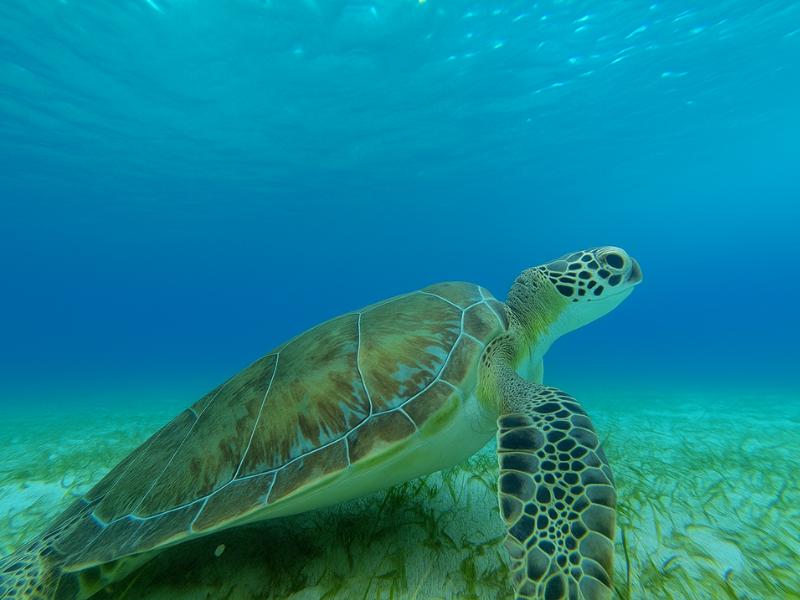
Because the rays rest partly buried, the practical advice is to float rather than walk wherever you can, and to look down before you stand. Give any ray room to move off. Swimming on top of one, cornering it or reaching down to touch it breaks the same rule as lifting a sea star. Our notes on how safe snorkeling in Cozumel is cover shallow-water entries and staying comfortable with wildlife around you.
One more thing on names. Some tour listings describe "manta rays" at El Cielito, the shallow pool many trips visit after El Cielo. The rays our research describes resting on the sand in this area are southern stingrays. Manta rays are a different, open-water animal, so treat that listing wording loosely.
How Deep Is The Water At El Cielo, And Can Non-Swimmers Go?
Typically 2 to 6 feet, often waist to chest deep for an adult, depending on the tide and where the boat stops. The shallowest parts allow standing at low tide, while the edges drop deeper. Non-swimmers can enjoy it in a life jacket with a guide close by, since every El Cielo tour we list supplies vests.
The shallow water is the big reason El Cielo suits people who are nervous about snorkeling. You get off the boat into calm, clear water, and in many spots you know the bottom is not far away. That changes how people breathe through a snorkel. Tense swimmers relax, and relaxed swimmers see more.
It is not a swimming pool, though. The depth varies with the tide, and the area around the sandbar is deeper. Someone who cannot swim should wear the vest the whole time, stay close to the guide or a strong swimmer, and not wander off the shallowest section. Our guides to snorkeling as a non-swimmer and snorkeling with kids in Cozumel go through vests, entries and how to build confidence first.
Families with young children or a nervous swimmer often find a private boat easier, because the crew works around one group and nobody is waiting on anyone else. The private El Cielo tour below takes 1 to 5 guests on its own boat, with a stop at El Cielo of around 45 minutes and El Cielito after it. Its listing gives two different lengths, 3 hours in our tour data and 4 hours in the description, so check the live listing.
When Is The Best Time To Visit El Cielo?
Mornings, ideally before about 11 AM, when the water is usually calmest, visibility is at its best and fewer boats are at the sandbar. December to April is often noted for calmer seas and good visibility. El Cielo is reachable year-round, but wind can add chop, cut visibility or change which stops a boat makes.
Time of day matters more here than at most sites, for two reasons. Afternoon wind tends to build, which roughens the surface over a shallow sandbar quickly. And El Cielo is a popular stop, so an early visit means sharing it with fewer boats.
| When | What to expect at El Cielo | Our take |
|---|---|---|
| Early morning, before about 11 AM | Calmer water, better visibility, fewer boats | The best window; pick a tour that stops at El Cielo early if you can |
| Afternoon | Wind and chop can build; more boats may be around | Still worth doing, just less glassy |
| December to April | Often noted for calmer seas and good visibility | Popular season; book ahead |
| Winter cold fronts (Nortes) | Strong northerly winds can make the west coast choppy and close the port to small boats for 1 to 3 days | Keep a spare day if El Cielo is a must |
| Low tide | Shallowest water; standing is easier in the shallowest parts | Watch where you put your feet |
| Summer, June to September | Warmest water, around 84 to 85 F (29 C) | Comfortable in the water; the sun on the boat is strong |
The Norte fronts deserve a note. They mainly arrive from December to February or March, pass quickly, and the water is often at its clearest right after one. Our guide to the best time to go snorkeling in Cozumel covers the whole year in detail.
If you are a cruise passenger, your ship's hours decide a lot of this for you. A morning departure that fits your all-aboard time with a margin is the ideal case. Our guide for cruise passengers covers how to fit a 4-hour trip into a port day.
Which Tours Go To El Cielo, And How Do They Compare?
Six of the tours we feature stop at El Cielo or El Cielito: two group boats at around $75 to $77 per person, a small-group charter listed from around $126, and three private boats from around $460 to $999 for the boat. They differ most on privacy, park fee handling and what is served.
Every figure below comes from the tour listings on our site. Prices are the listing's from-price in US dollars; check the live listing for your date. Private boats are priced per boat, not per person, so do not compare those numbers directly with the group tickets.
| Tour | Format and price basis | Length | El Cielo stops | Park fee | Rating |
|---|---|---|---|---|---|
| 3 Reefs Boat Tour with Snorkeling and Drinks | Group boat, around $75 per person | 4 hours | Playa el Cielo, after Palancar and Columbia | Extra, US$11 cash | 4.4 from 8,484 bookings |
| Turtle Sanctuary Luxury Catamaran Experience | Catamaran, max 20 guests, around $77 per person | 4 hours | Playa el Cielo for about an hour, then El Cielito for 30 to 40 minutes | Extra, $10 or 200 pesos | 4.9 from 3,472 bookings |
| Private Snorkeling Charter to El Cielo and Cielito | Listing describes a small group of up to 20; from around $126 | 4 hours | El Cielo about 45 minutes, El Cielito about 30 minutes | Listing contradicts itself; confirm | 5.0 from 417 bookings |
| Private El Cielo Snorkel Tour (Boat, Food, Drinks and Beach) | Private boat for 1 to 5 guests, from around $460 | 3 hours in our data, 4 in the description | El Cielo and El Cielito, about 45 minutes each | Not mentioned; ask | 5.0 from 1,091 bookings |
| El Cielo Private 4-Hour Tour | Private speedboat, from around $572 | 4 hours | El Cielo or El Cielito, 45 to 60 minutes, stops chosen by your group | Included | 4.8 from 479 bookings |
| "First Lady" Private Snorkeling Charter | Private 29-foot powerboat, up to 10 guests, from around $999 | 4 hours | El Cielo sandbar, 45 to 60 minutes | Included | 4.9 from 1,270 bookings |
A few differences the table cannot fully show. The 3 reefs boat tour is the most booked trip on our site and departs Marina Asipona, which its listing puts 5 minutes from the cruise ports. The turtle sanctuary catamaran adds El Cielito and an open bar with rum punch and margaritas. The small-group charter to El Cielo and Cielito adds Zul-Ha to its reef stops, alongside Palancar and Colombia.
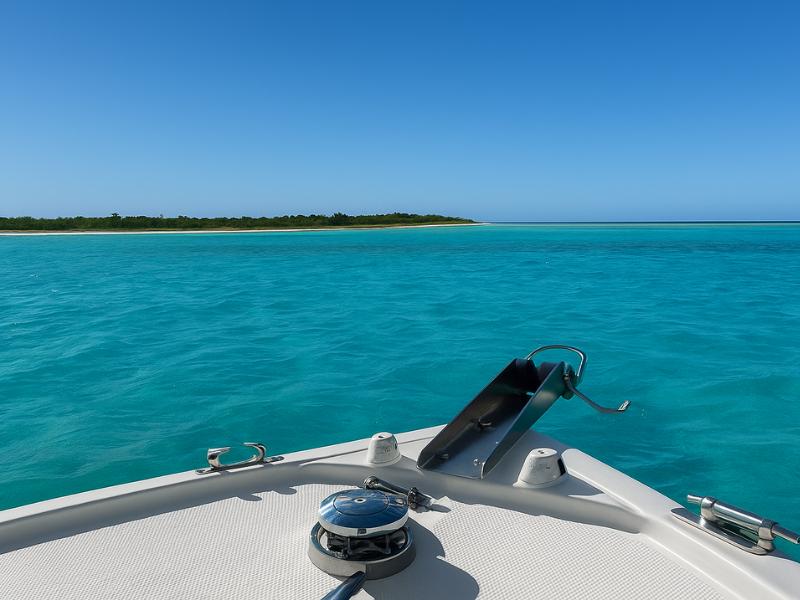
On the private side, the three boats suit different groups. The private El Cielo tour meets at San Francisco Beach Club, which its listing puts about 10 minutes by taxi from the cruise pier, and names loungers, umbrellas and kayaks as rentals of around $20 per person. The El Cielo private 4-hour tour lets you pick your own mix of reefs and includes park fees, and it says no sunscreen is allowed on the boat. The First Lady is the biggest private option, with an open bar and optional fishing.
Is A Private El Cielo Boat Worth The Extra Money?
For a couple, usually not; a group boat covers the same stops for far less. For a family or group of four or more, the gap narrows quickly, because private boats are priced per boat. At full capacity, the First Lady works out near $100 each before tips, and the 1 to 5 guest private tour near $92.
The simple sums below use each listing's from-price and the group sizes the listings state. Group tickets include the $10 to $11 park fee their listings quote as extra, since you pay it either way. Figures are rounded, exclude tips, and will move with the live price for your date.
| Option | 2 people | 4 people | Largest group the listing states |
|---|---|---|---|
| 3 reefs group boat ($75 plus $11 park fee each) | About $172 total | About $344 total | Per person, no private capacity |
| Turtle sanctuary catamaran ($77 plus $10 park fee each) | About $174 total | About $348 total | Per person, max 20 on board |
| Private El Cielo tour ($460 per boat) | $460, about $230 each | $460, about $115 each | 5 guests: about $92 each |
| El Cielo private 4-hour tour ($572 per boat, park fees included) | $572, about $286 each | $572, about $143 each | Capacity not stated in the listing |
| "First Lady" charter ($999 per boat, park fees included) | $999, about $500 each | $999, about $250 each | 10 guests: about $100 each |
What the extra money buys is control. On a private boat, your group decides how long to stay at El Cielo, which reefs to add, and when to head back. That is worth more to some groups than others: families with small children, cruise passengers who need a guaranteed return time, people celebrating something, and groups with mixed swimming ability all tend to get more from it.
The group boats have their own strengths. They are the cheapest way to see El Cielo, they come with guides who run the same route every day, and the reviews on the two group tours we list are strong. For two people who just want to see the sea stars and a couple of reefs, we would book a group seat and keep the difference.
For a group that can fill it, the First Lady is the clearest private case on our list: up to 10 guests, park fees included, open bar, and a marina about 10 minutes by taxi from the cruise pier.
What Should You Bring And Expect On An El Cielo Day?
Bring a swimsuit, towel, rash guard, hat, a waterproof pouch or camera, and cash for the park fee and tips. Expect a briefing, reef stops first on most routes, then 45 to 60 minutes at El Cielo, with snacks and drinks between stops. The El Cielo trips we list supply masks, fins, snorkels and life jackets.
Most of the packing list is standard. Sun protection needs more thought than usual, because the park's official rule is not to use sunscreen, and one of the private tours says none is allowed on the boat. A long-sleeved rash guard solves this, and guests on these tours say the sun off the water is strong.
- Cash in small bills. For the park wristband where it is not included, and for crew tips at the end of the trip. Pesos are preferred for the fee.
- Towel. Several El Cielo listings say towels are not supplied.
- Motion sickness tablets if you need them. Guests on the private boats mention that seas can be wavy on the ride out.
- A camera that works in water. The shallow, clear water makes El Cielo one of the easiest places in Cozumel to photograph animals without touching them.
On timing, most 4-hour trips spend the first half on the reefs and reach El Cielo later in the morning. If an early stop at the sandbar matters to you, a private charter lets you ask for it. Our guide to how long snorkeling tours last breaks down where the hours go on a typical trip.
So Is El Cielo Worth The Boat Ride?
For most visitors, yes. Few stops on Cozumel let you float over large wild sea stars and resting stingrays in water this shallow and clear, and it usually comes bundled with Palancar or Columbia in one 4-hour trip. It is less worth it if you only want coral, or if the only slot left is a windy afternoon.
The strongest case for El Cielo is that it widens who gets a great snorkel. Strong swimmers get the reefs and then a relaxing finish. Nervous swimmers, children and first-timers get a stop where the water is calm, shallow and forgiving. On an island best known for its offshore reefs, that is a real advantage.
| If you are | Is El Cielo worth it? | What we would book |
|---|---|---|
| A first-time or nervous snorkeler | Yes, it may be the best stop of your trip | A 4-hour trip that ends at El Cielo, in a vest |
| A family with children | Yes, shallow and sheltered | A private boat for up to 5, or a group boat with vests |
| A couple on a budget | Yes, as part of a group trip | The 3 reefs boat or the turtle sanctuary catamaran |
| A group of 6 to 10 | Yes, and a private boat makes sense | The First Lady charter, park fees included |
| Mainly interested in coral and walls | As a bonus, not the main event | A reef-focused trip that also stops at El Cielo |
| Only free on a windy afternoon | Maybe; conditions may be choppy | Ask the operator how the water looks that day |
What makes it special is not a single sight. It is the combination of shallow light, white sand, wild animals and a set of rules that keeps them there. Float, look, leave everything where it is, and El Cielo tends to be the stop people remember longest from a Cozumel trip.
More Cozumel Tours Worth Comparing
Whichever boat you choose, check two lines in the listing before you pay: whether the park fee is included, and whether El Cielito is on the route as well as El Cielo. Those two details explain most of the differences in what people get from the day.