Cozumel Reefs National Marine Park Rules And Fee: What Snorkelers Need To Know
Almost every snorkel boat on Cozumel's west coast works inside a federal protected area. Here is what that park covers, the nine rules CONANP publishes, what the 225 peso fee is and how each kind of tour handles it.
The wristband surprises people. You step onto a snorkel boat at a Cozumel marina, the crew counts heads, and someone asks for 225 pesos before handing over a paper or plastic band with the date on it. Our team at Cozumel Snorkeling Tours hears the follow-up questions every season: what is that fee, is it a scam, why did the listing say it was included, and what are these rules about sunscreen and gloves? The short version is that most of the famous snorkel water off Cozumel sits inside a federal protected area, and the fee and the rules both come from it.
This guide lays out what the park is, what it protects, the nine visitor rules its managing agency publishes, the fee and its exemptions, and how the tours we list actually handle the charge. It also untangles the most common mix-up we see, which is the difference between the federal park fee and the ticket to Chankanaab Park.
What Is The Cozumel Reefs National Marine Park?
It is Parque Nacional Arrecifes de Cozumel, a federal protected area declared on 19 July 1996 and managed by CONANP, Mexico's national protected areas agency. It covers about 11,988 hectares, almost all of it sea, running from km 6 of the southern coastal road around the south of the island to Punta Chiqueros on the east side.
The decree was published in Mexico's official gazette, the Diario Oficial de la Federacion, under President Ernesto Zedillo. The reefs it protects are part of the Mesoamerican Barrier Reef System, the long reef tract that runs down the Caribbean coast of Mexico and Central America.
For a snorkeler, the boundary is the useful part. CONANP's visitor page describes the park as the beaches and marine area from kilometer 6 of the southern coastal road, at the level of the Hotel Presidente, around to Punta Chiqueros on the east coast. Almost every reef the boats visit on the southwest side, including Palancar, Columbia and the El Cielo sandbar, falls inside it. You can check the official description on CONANP's page for Arrecifes de Cozumel, which also carries the fee and the visitor rules.
| Item | What the official sources say |
|---|---|
| Official name | Parque Nacional Arrecifes de Cozumel |
| Declared | 19 July 1996, published in the Diario Oficial de la Federacion, under President Ernesto Zedillo |
| Total size | 11,987.88 hectares: 11,905.60 ha marine and 82.28 ha terrestrial |
| Where it runs | Beaches and sea from km 6 of the southern coastal road, around the south of the island, to Punta Chiqueros on the east side |
| Managed by | CONANP, with PROFEPA, SEMARNAT and the Mexican Navy named in the decree |
| Opening hours | Monday to Sunday, 6:00 to 22:00; summer schedule 6:00 to 23:00 |
| Entry fee | 225 pesos per person, per day |
| Attractions CONANP lists | The coral reefs, El Cielo beach and the C-53 shipwreck |
CONANP's own site for the park rounds the size to about 12,000 hectares and describes the purpose plainly: scientific monitoring, strict surveillance, education and tight control of recreational activities and the number of boats in the area. The park's CONANP home page sets that out in Spanish. That last point, controlling boats and activities, is what shapes your day on the water more than anything else.
What Does The Marine Park Protect?
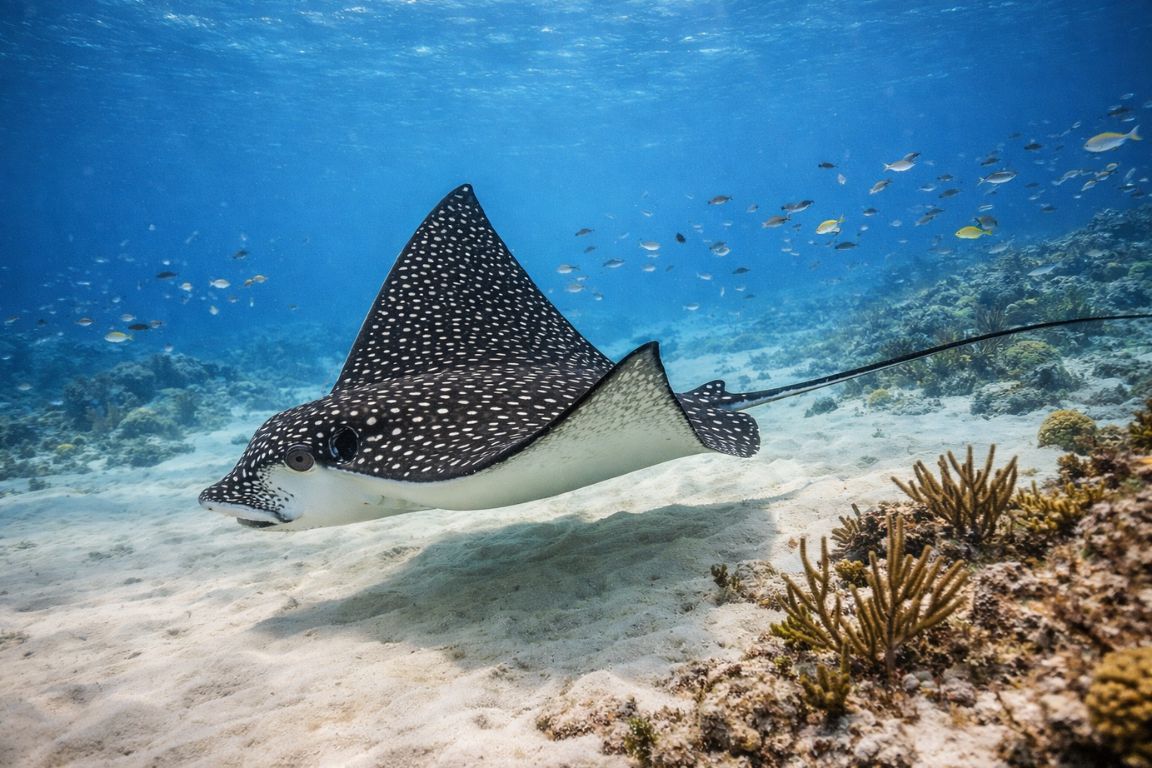
The park protects Cozumel's coral reefs and the habitats around them, including hard and soft corals, seagrass beds and patches of mangrove, plus the animals that use them. CONANP names sea turtles, the endemic splendid toadfish, spotted eagle rays, stoplight parrotfish and elkhorn coral among its representative species. Extraction, pollution and physical damage are all off limits.
The official materials are specific about species. CONANP's representative list for the park includes the splendid toadfish, a fish found only here, elkhorn coral, the hawksbill turtle, the spotted eagle ray, the stoplight parrotfish and the red mangrove, alongside the Cozumel pygmy raccoon on land. Green and loggerhead turtles are protected too.
| Protected feature | Examples named in official sources | What it means when you are in the water |
|---|---|---|
| Coral reefs | Hard and soft corals, including elkhorn coral | Keep 1.5 meters away; never stand, kneel or rest a hand on them |
| Reef fish | Stoplight parrotfish and the endemic splendid toadfish | Watch, photograph, do not feed or chase |
| Sea turtles | Green, hawksbill and loggerhead turtles | Give them room to surface and swim off; no touching or riding |
| Rays | Spotted eagle rays | Stay above and to the side; do not block their path |
| Seagrass and sand | Seagrass beds on the sandy bottom | Float rather than walk where you can; fins kick up sand onto nearby coral |
| Mangroves | Red mangrove in parts of the park | Not usually part of a snorkel trip, but covered by the same no-extraction rule |
We keep a fuller rundown of the animals, where each tends to turn up and how likely a sighting is in our guide to what marine life you can see in Cozumel. The point here is narrower. Every one of those animals is protected by law inside the park boundary, which is why guides are firm about distance, not fussy.
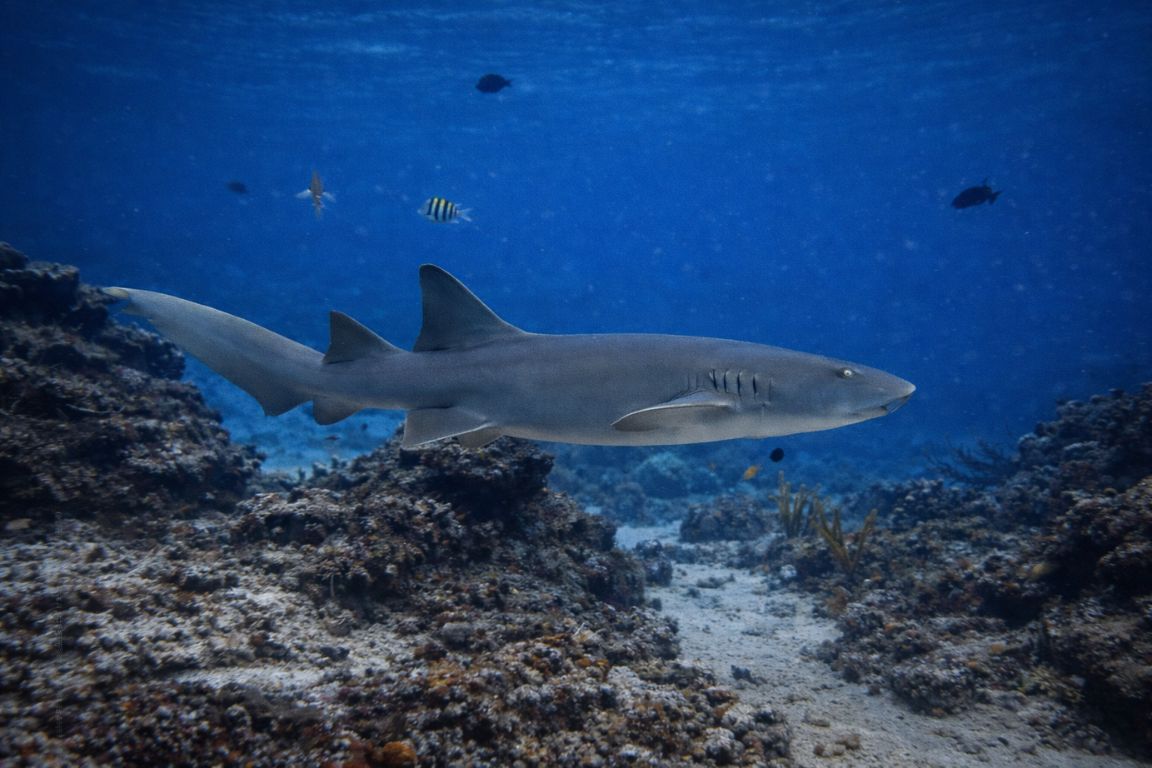
The group boats below all spend their time on reefs inside the park, and all three list gear and a guide who briefs you before you get in.
Cozumel Snorkeling Tours That Fit This Trip
Booked through the operators' own listings, with live prices and cancellation terms shown there.
What Are The Official Rules For Snorkelers In The Park?
CONANP publishes nine visitor rules: keep 1.5 meters from the reefs, do not feed wildlife, use only CONANP-authorized boats and guides, no anchoring, do not touch the reefs, do not use sunscreen, do not disturb marine fauna, no fishing, and no gloves, knives or rods. Your guide's briefing is essentially this list.
The list below is the official wording from CONANP's visitor regulation for the park, with a plain English reading next to it. It is short, and it covers almost everything a snorkeler is likely to get wrong.
| No. | Official wording | Plain English | What it means for a snorkeler |
|---|---|---|---|
| 1 | Mantenerse a una distancia de 1.5 metros de los arrecifes | Stay 1.5 meters from the reefs | Float above or beside the reef, not on it; wear a vest if you need to rest |
| 2 | No alimentar a la fauna | Do not feed wildlife | No bread, crackers or fish food, even if someone offers it |
| 3 | Contratar embarcaciones y guias autorizados por la CONANP | Hire only CONANP-authorized boats and guides | Book an established operator; the wristband is part of that system |
| 4 | El anclaje esta prohibido | Anchoring is prohibited | Boats tie up to mooring buoys at each site |
| 5 | No tocar los arrecifes | Do not touch the reefs | No standing, kneeling, grabbing or steadying yourself on coral |
| 6 | No usar bloqueador solar | Do not use sunscreen | Cover up with a rash guard; see the sunscreen section below |
| 7 | No perturbar a la fauna marina | Do not disturb marine wildlife | No chasing turtles, lifting sea stars or cornering rays |
| 8 | No pescar | No fishing | Nothing is taken from the water, shells and coral included |
| 9 | No utilizar guantes, cuchillos, ni varillas | Do not use gloves, knives or rods | Leave snorkel gloves and pointer sticks at home |
Two of these get the most pushback from visitors, and both are covered in the next two sections: the sunscreen rule and the glove rule. The rest tend to go without argument once people understand that the reef they are floating over is a living thing and not a rock.
Rule three matters more than it looks. It means the park, not only the tour company, decides who may carry snorkelers onto the reefs. Operators have to meet permitting and training requirements to work there. A listing that promises a "focus on responsible reef viewing", like the charter below, is describing what the rules already require.
Why Are Gloves, Touching And Feeding Banned?
Because each one leads straight to damage. Gloves make people comfortable grabbing coral, touching breaks living coral tissue and stirs sand onto it, and feeding changes how fish and rays behave around boats. The rules on touching, fauna and gloves work together: stay off the reef, leave animals alone, and take nothing that makes contact easier.
The glove ban confuses divers most, since gloves are normal kit in plenty of places. The logic in Cozumel is simple. A bare hand makes you hesitate before touching something; a gloved hand does not. Take away the gloves and people keep their hands to themselves. Knives and rods, the other items in rule nine, are banned for the same reason.
Touching is the one people break without meaning to. Someone tires, drops their legs, and a fin lands on coral. Or a hand goes out to steady a body in the current. That is why the distance rule is set at 1.5 meters rather than "do not touch": the gap gives you room to make a mistake without it landing on the reef. If you know you tire quickly, wear the vest the tour provides and ask the guide to keep you near the boat.
Feeding is banned outright, and it covers everything from bread thrown off the stern to food held out to a ray. Animals that are fed learn to crowd boats and people, which changes their natural behavior. The rays and sea stars that make El Cielo famous are wild animals left alone, and our piece on what makes El Cielo special covers how the no-touch rule works at that sandbar in particular.
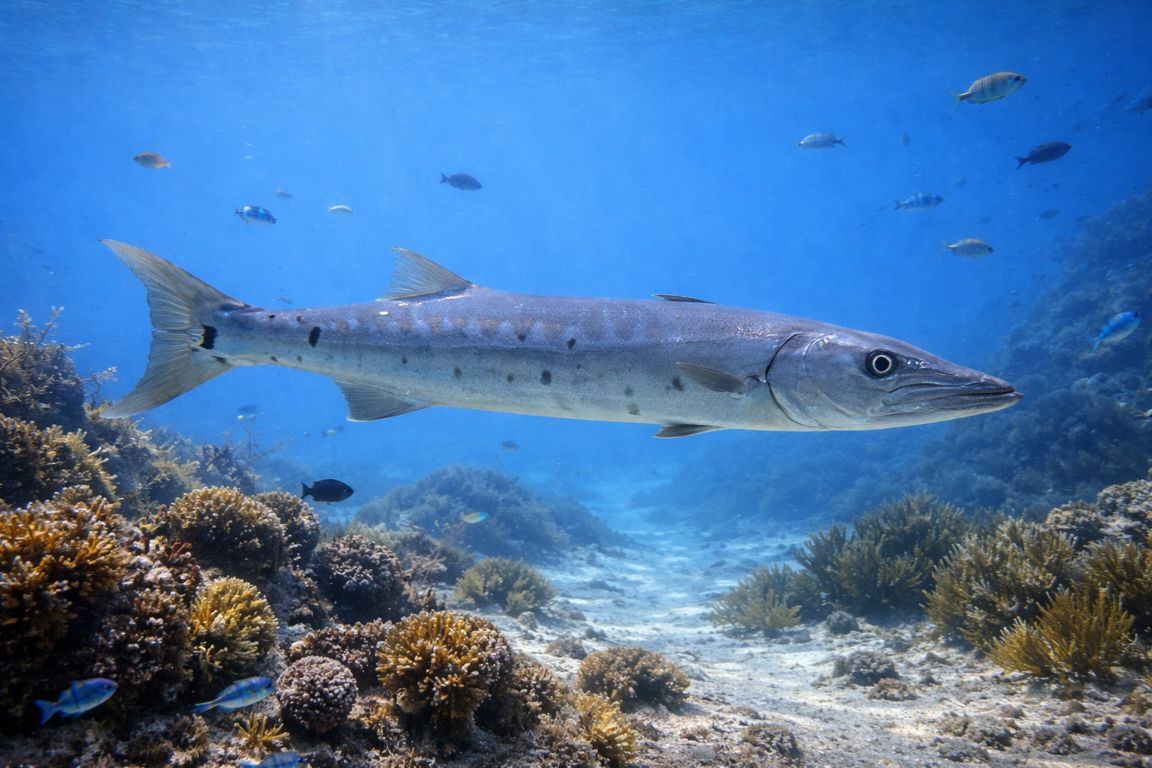
None of this makes the guides strict for the sake of it. They work these reefs every day, and the reef is their livelihood. Most will explain the reasons if you ask, and the good ones will point out an animal from a distance so that nobody feels the need to swim in close.
Can You Wear Sunscreen In The Cozumel Marine Park?
The official visitor rules say not to use sunscreen in the park. Operators in practice accept a mineral product applied well before boarding and some check bags at the dock, but no Mexican law defines "reef-safe". The dependable answer is a long-sleeved rash guard and a hat, with any sunscreen kept to the face.
This is the rule where what you read online and what the park says drift furthest apart. CONANP's published rule is short: "No usar bloqueador solar", do not use sunscreen. An older rules card that still circulates bans sunblock and suntan oil that is not biodegradable, which is a softer line. Neither one comes with an approved list of products.
That matters because "reef-safe" on a label is a marketing claim, not a Mexican certification. Research our team gathered for this guide found no Mexican statute, list or certification that defines it. What operators accept on the dock is usually mineral sunscreen based on zinc oxide or titanium dioxide, and many prefer that you skip it on your body entirely and wear a rash guard.
- What the tours we list say. Most listings ask you to apply reef-safe sunscreen before boarding. The El Cielo private 4-hour tour goes further and says none is allowed on the boat at all.
- What guests say. Past guests on those tours mention strong sun reflecting off the water, and several recommend a light rash guard.
- What we would do. Rash guard or long-sleeved swim shirt, hat for the boat, and any sunscreen applied to the face at breakfast rather than on the boat.
Chankanaab Park runs its own sunscreen rule, and it is phrased differently: biodegradable or reef-safe products only, zinc-based recommended, with bag checks and storage for anything that does not pass. If you plan both a boat day and a Chankanaab day, the rash guard solves both. Our guide on how safe snorkeling in Cozumel is covers sun exposure and heat on the boat in more detail.
How Much Is The Marine Park Fee And Who Is Exempt?
The fee is 225 pesos per person, per day, charged as a federal rights fee for entering the park. That was about $13 at August 2026 exchange rates. Children under 12, older adults, pensioners, retirees and people with disabilities are exempt, students and teachers get 75 percent off, and residents of Mexico pay half.
The figure and the exemptions come straight from CONANP's page for the park. The legal term is "cobro de derechos", a rights charge, which is why it is not a tip, a donation or an operator's surcharge. It goes to the protected area, and the dated wristband you receive is the proof that you paid.
| Visitor | Official rule | What you pay per day | What to carry |
|---|---|---|---|
| Standard adult visitor | Full rights charge | 225 pesos | Cash, pesos preferred |
| Children under 12 | Exempt | Nothing | A document showing age |
| Older adults, pensioners and retirees | Exempt | Nothing | A valid credential |
| People with disabilities | Exempt | Nothing | A valid credential |
| Students and teachers | 75 percent discount | About 56 pesos | A valid student or teacher credential |
| Mexican nationals and foreign residents of Mexico | 50 percent discount | About 112.50 pesos | Official ID proving nationality or residency |
The official page says the qualifying credential is checked on entry to the park, which in practice means showing it to the operator collecting the fee. If you think you qualify, bring the document and mention it when you book. Operators handle the wristbands every day, and it is easier to sort out at the office than on a rocking boat.
On the dollar figure, the exchange rate moves and so do the quotes. Reports checked in August 2026 put 225 pesos at about $13 at roughly 16.9 to 17 pesos to the dollar, while some operators quote $13 to $14 and some still quote around $11. The peso amount is the official one.
How Is The Park Fee Charged On A Snorkel Tour?
The authorized operator collects it and hands you a dated wristband. Some tours fold it into the price, others list it as payable in cash on arrival, often quoted as $10 to $12 or 200 to 240 pesos. Among the tours we list, two private charters include it, and three group tours say it is extra.
This is the part that causes the most confusion at the dock, so we went through the inclusion lists of every tour on our site. The table below is what each listing says, not what we assume. Where a listing does not name the park fee at all, we say so.
| Tour on our site | Length | Park fee, as the listing states it |
|---|---|---|
| 3 Reefs Boat Tour with Snorkeling and Drinks | 4 hours | Not included: conservation fee of US$11 per person, cash on arrival |
| Turtle Sanctuary Luxury Catamaran Experience | 4 hours | Not included: $10 or 200 pesos per person, payable on site |
| Invisible Boat Snorkeling Adventure | About 1.5 hours | Not included: conservation fee of US$10 per person, on arrival |
| Private Snorkeling Charter to El Cielo and Cielito | 4 hours | Inclusions list the national park bracelet as not included, US$12 or 240 pesos on site, while the short description says the bracelet is included; confirm when booking |
| El Cielo Private 4-Hour Tour | 4 hours | Included: "all taxes and marine/natural area fees"; a marina boarding fee of about US$1 is extra |
| "First Lady" Private Snorkeling Charter | 4 hours | Included: national park fees |
| Private El Cielo Snorkel Tour (Boat, Food, Drinks and Beach) | Listed at 3 hours | Not mentioned in the listing; ask the operator |
| SeaTrek Helmet Diving | 1 hour | Marine park fee "if applicable", payable on site |
| Transparent Boat Snorkel Tour with 2 Beers | About 1.5 hours | Dock tax of $5 included; park fee not named, ask |
| SNUBA at Chankanaab | 2 hours | Chankanaab entrance of about US$23 cash is extra; this is the park ticket, not the federal fee |
Notice that the listings quote the fee in several ways: $10, $11, $12, 200 pesos and 240 pesos. The official amount is 225 pesos. Some of that spread is rounding into dollars at different exchange rates, and some is older figures that were never updated. We would carry enough pesos to cover 225 per person and not rely on the lowest quote.
Where a private charter includes the fee, it is one less thing to handle on the day, and the comparison with a group ticket gets a little closer. The El Cielo private tour below is one of the two that state it plainly.
For anyone coming across from the mainland for the day, the fee sits on top of the ferry and the tour. Our day trip guide from Playa del Carmen or Cancun puts it into the full cost of that day.
How Is The Park Fee Different From Chankanaab Park's Entry Fee?
They are two different charges from two different bodies. The 225 peso fee is a federal CONANP rights charge for entering the protected area. Chankanaab's ticket, around $25 to $32 for adults in 2026 listings, is paid to a municipal foundation for a managed park with a beach, gardens, a lagoon and snorkel access. One does not replace the other.
Chankanaab is run by the Fundacion de Parques y Museos de Cozumel, not by CONANP. It sits south of the park's km 6 starting point, on the coast the national park borders, which is part of why people assume the two are the same thing. The SNUBA listing on our site does not help, since it calls the place "Chankanaab National Park". The ticket you buy at its gate is for the park's facilities, not the federal fee.
| Question | National marine park fee | Chankanaab Park entry |
|---|---|---|
| Who charges it | CONANP, the federal protected areas agency | Fundacion de Parques y Museos de Cozumel |
| What it is | A federal rights charge for entering the protected area | A ticket to a managed park with beach, gardens, lagoon, shows and snorkel access |
| Price | 225 pesos per person, per day | Adults around $25 to $32; children lower, around $16 to $18 or half price; under 3 often free |
| Packages | None; it is a flat charge | All-inclusive packages around $52 to $110 with food, drinks and gear |
| Snorkel gear | Not part of the fee | Rental extra, around $10 to $12 |
| Proof of payment | Dated wristband | Park ticket or wristband at the gate |
| How it is paid | Collected by the authorized operator, usually cash | At the park entrance |
| Sunscreen rule | Official rule: no sunscreen | Biodegradable or reef-safe only, zinc-based recommended, bags checked |
The practical takeaway is simple. A Chankanaab ticket does not count as your federal wristband for a boat trip, and the federal wristband will not get you through Chankanaab's gate. If you do both on the same day, expect to pay both, unless a package you bought says otherwise.
Chankanaab is the easiest place on the island for a first shore snorkel, and it is also where the SNUBA experience below starts. That listing is upfront that the park entrance is extra and payable in cash.
Do Beach Club And Shore Snorkelers Follow The Same Rules?
Yes, whenever you are in the water inside the park. The nine visitor rules apply to anyone entering it, and many of the southern beach clubs sit on park coastline. The fee is aimed at boat snorkelers; some beach club packages include it and some do not, so ask at the entrance before you pay.
Look at the boundary again: the park starts at km 6 of the southern coastal road. Money Bar sits at km 6.5 and SkyReef at km 10, which puts both on park coastline. CONANP's own list of services inside the protected area includes "rosarios para nado", the floating swim lines some beach clubs set out, alongside mooring buoys and signage.
Shore snorkeling feels informal, and that is where the rules slip most. There is no guide at your shoulder, the water is shallow, and standing up on something hard feels natural. It is exactly the moment the distance and no-touch rules exist for. Shore reefs are closer to the surface than the offshore sites, so a tired snorkeler can reach the coral with a foot far more easily. Our comparison of shore and boat snorkeling in Cozumel goes through the trade-offs, and our cruise port piece on walking to a beach from the piers covers which clubs are close to the ships.
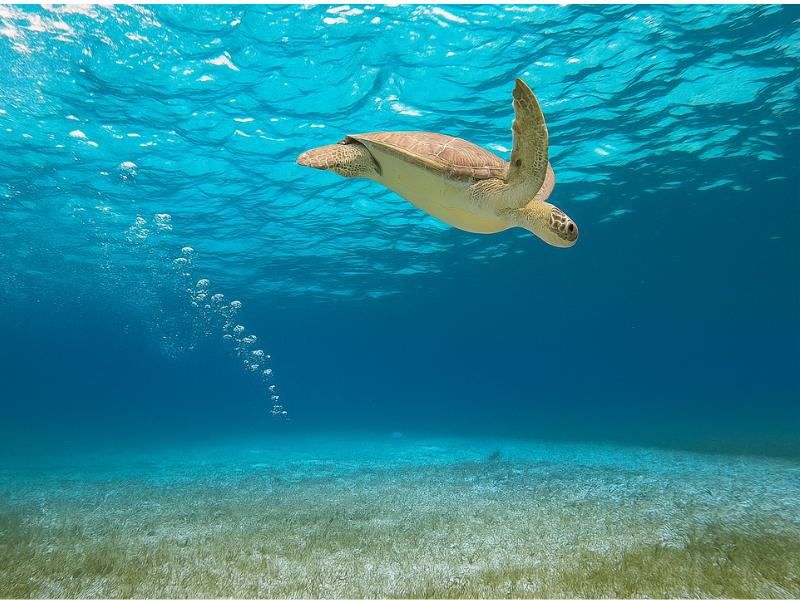
One guided option from the shore is the night snorkel from Money Bar. It stays in a small, defined area no deeper than 2.5 meters, and its listing describes watching octopus and other night species from a safe distance, which is the park's approach in a single line.
What Do The Boat Rules Mean For The Tour You Pick?
They shape the day more than most people notice. Boats must tie to mooring buoys instead of anchoring, slow to 4 knots or no wake near buoys and swim areas, work only in permitted zones and hours, and carry CONANP-authorized guides. That is why stops are fixed, approaches are slow and sites sometimes change.
These rules come from the park's management plan and its visitor regulation. Anchoring is prohibited except in an emergency, and even then only on sand away from coral. Within 200 meters of the mooring buoys, or anywhere people are swimming or diving, the limit is 4 knots or no wake.
| Boat rule | What the park requires | What you notice on the tour |
|---|---|---|
| Mooring buoys | Boats use designated buoys at each site | The crew ties off at a buoy instead of dropping an anchor |
| No anchoring | Prohibited, except emergencies and then only on sand away from coral | Stops happen where buoys are, not wherever the view is nice |
| Speed limit | 4 knots or no wake within 200 meters of buoys and in swim or dive areas | The boat slows well before a site and creeps in |
| Authorized operators only | Boats and guides must hold CONANP authorization | Wristbands, briefings and head counts are part of that system |
| Zones and hours | Activities limited to designated zones, generally 6:00 to 22:00, or 23:00 in summer | Night trips and site choices work within those windows |
| Reef rest calendar | CONANP asks visitors to respect the calendar of reef rest periods | A reef on the itinerary may be swapped for another on a given day |
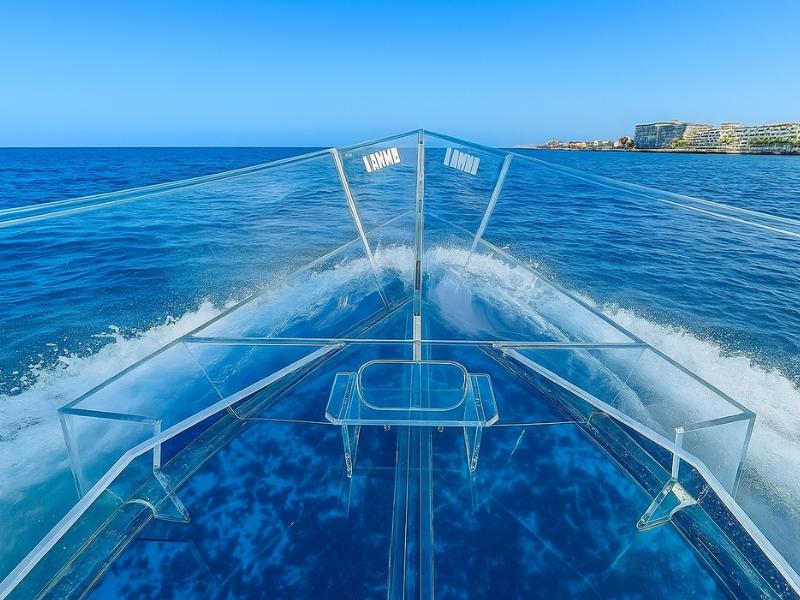
For tour choice, the rules push in a few directions. Short trips like the clear boat and glass-bottom tours stay near the coast, spend less time in open water and still use the same buoys. The 4-hour group boats cover more reefs in a morning, with a guide managing a larger group at each stop. Private charters let one group set the order of the sites, but they still moor where the park allows and follow the same speed limits.
The site swaps catch people out. If your listing names Palancar and Columbia and the boat goes somewhere else, it is not always a bait and switch. Weather is the usual cause, and the Norte winds covered in our guide to the best snorkeling spots close exposed sites for a day or three. Park rules on zones and rest periods can also move a stop. A good operator will tell you why.
Who Enforces The Rules, And What Should You Expect On The Day?
CONANP enforces them, with PROFEPA, SEMARNAT and the Mexican Navy named in the park decree. Rangers patrol, check wristbands and watch for mooring, distance and activity breaches, while operators carry the permitting and training duties. For a snorkeler, it shows up as a briefing, a wristband and a guide who will stop you touching anything.
We did not find published fine amounts for individual snorkelers who break the rules, so we will not guess at one. The pressure mostly lands on operators, whose authorization depends on how their boats and guides behave. That is why the crews are quick to call someone back from the reef. Their permit is on the line, not only your conduct.
Here is what a normal morning looks like with all of this in place. You pay or show your inclusion at check-in, get a dated wristband, and hear a briefing that covers distance, no touching and no feeding. At each site the boat slows, ties to a buoy, and the guide leads the group along the reef. Between sites, the boat speeds up in open water and slows again as it approaches the next buoy.
If you are weighing which kind of trip suits you, the fee question can help sort it. On a private charter that includes park fees, the whole thing is settled at booking. On a group ticket or a short coastal boat, bring pesos for the wristband and a little extra for tips.
More Cozumel Tours Worth Comparing
The rules sound like a list of restrictions. On the water, they read differently: the reefs off Cozumel are still worth crossing an ocean for, and a big part of the reason is that boats moor instead of anchoring and visitors keep their hands off. Paying 225 pesos and wearing a rash guard is a small price for that.