Best Snorkeling Spots in Cozumel
Which Cozumel snorkeling sites are actually worth your time — Palancar, Columbia, Chankanaab, or something else entirely? We break down every major reef by skill level, marine life odds, crowd patterns, and real-world conditions so you choose the right spot for your priorities — not just another recycled “best of” list.
Last updated: March 11, 2026
Travelers researching Cozumel snorkeling sites encounter dozens of conflicting recommendations with every blog declaring different spots essential, leaving visitors uncertain whether Palancar or Columbia deserves priority, whether Chankanaab justifies the entry fee, or which sites actually deliver the sea turtles and eagle rays filling everyone’s highlight photos. The confusion compounds because site quality varies dramatically based on skill level, current conditions, and time of day, meaning a site perfect for one visitor proves genuinely wrong for another depending on swimming comfort, marine life priorities, and whether boat access fits the itinerary.
Choose the reef, shore or boat-viewing experience before comparing departures. Explore Turtle Sanctuary Catamaran
At Cozumel Snorkeling Tours where we visit these reefs daily across thousands of trips annually, we provide honest site-by-site assessment based on actual conditions rather than recycled travel blog rankings copying each other without real operational experience. This complete guide covers every significant Cozumel snorkeling location including world-class offshore reefs requiring boat access, beginner-friendly shore-accessible sites, hidden intermediate gems avoiding tourist crowds, skill level requirements for each location, realistic marine life encounter probabilities, seasonal accessibility variations, and honest comparisons helping you match specific sites to personal priorities rather than following generic best-of lists treating every visitor identically.
Best Snorkeling Spots in Cozumel
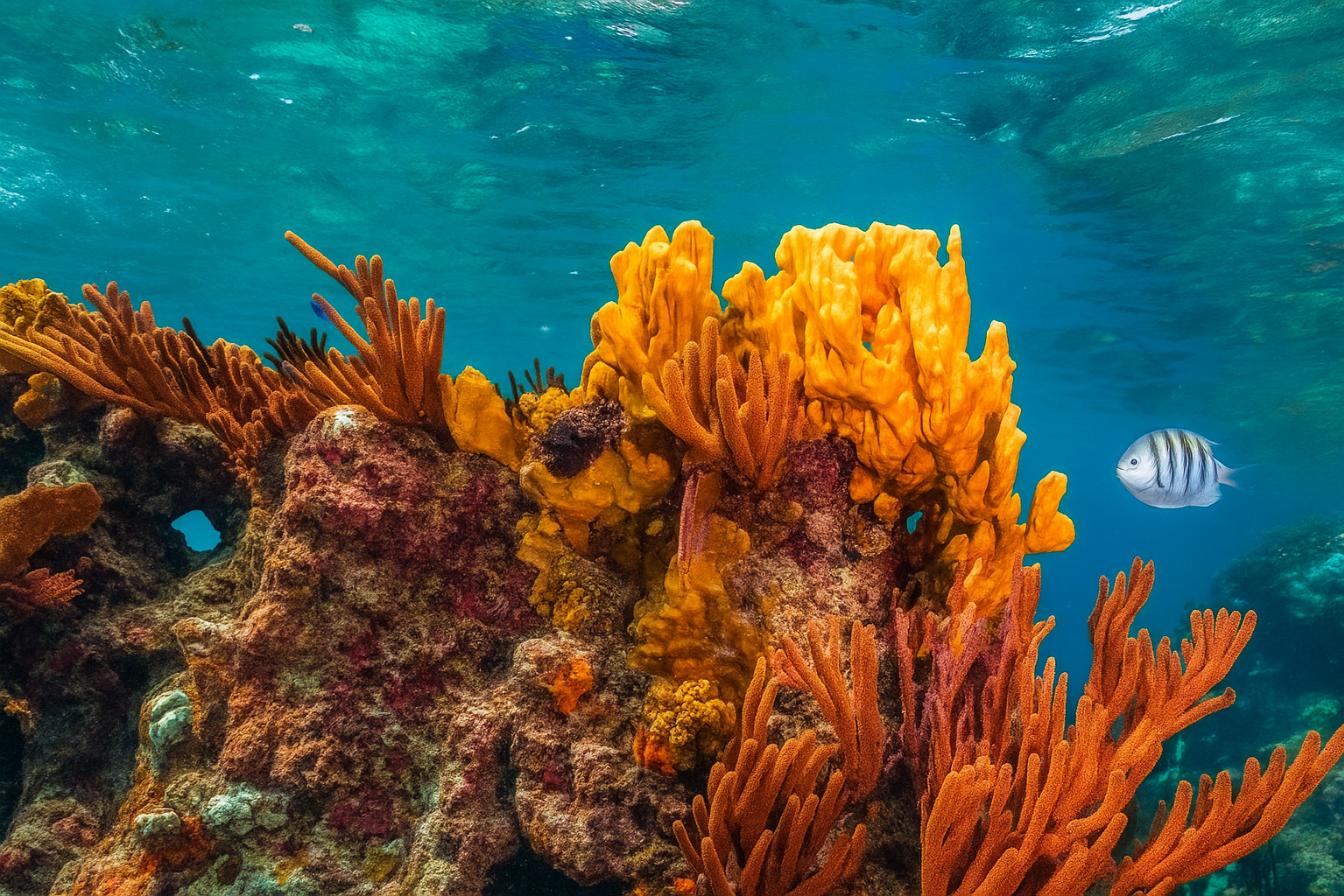
Palancar Reef delivers best overall experience combining spectacular coral formations with reliable sea turtle, eagle ray, and nurse shark encounters suitable for most skill levels, Columbia Reef provides highest eagle ray encounter probability through distinctive cathedral formations, and Chankanaab Park offers safest most accessible beginner introduction with shore entry and calm protected conditions.
Site categories: World-class offshore reefs including Palancar, Columbia, Santa Rosa Wall, and Paso del Cedral require boat access delivering Cozumel’s genuinely exceptional wildlife encounters, while beginner-friendly accessible sites including Chankanaab Park and San Francisco Beach provide shore entry for independent snorkelers accepting reduced marine life density. Specialty locations including Punta Sur’s dramatic southern formations and Paradise Reef’s turtle concentration serve specific interests, with site selection depending heavily on skill level, available time, and particular wildlife priorities rather than universal best-of rankings treating every visitor identically.
Access reality: Cozumel’s most spectacular sites sit 15-30 minutes offshore requiring boat tours for access, with shore-accessible alternatives delivering genuinely good though noticeably inferior experiences compared to offshore reefs where visibility, coral health, and marine life density reach world-class levels. Budget travelers choosing independent shore snorkeling miss Palancar and Columbia entirely, the two sites most responsible for Cozumel’s international reputation, making guided boat tours essential investments rather than optional upgrades for visitors wanting authentic world-class encounters.
Skill level matching: Complete beginners thrive at Chankanaab’s calm shallow cove and Paradise Reef’s mild current boat tours, intermediate snorkelers access Palancar Gardens and Columbia’s moderate drift sections, and advanced swimmers tackle Santa Rosa Wall’s powerful current and Punta Sur’s challenging southern formations. Every skill level finds genuinely rewarding wildlife encounters without compromising safety for excitement or vice versa, making Cozumel unusually accommodating for mixed-ability groups wanting shared experiences at appropriate individual difficulty levels.
Practical recommendation: Palancar Gardens combined with Columbia Reef in a single half-day 3 Reefs boat tour covers Cozumel’s essential highlights delivering sea turtles, eagle rays, nurse sharks, and dramatically different coral formations within optimal morning timeframe. This combination satisfies most visitors completely while leaving Santa Rosa Wall and Paso del Cedral as compelling reasons returning for additional tours.
| Site | Depth | Difficulty | Key Marine Life | Access | Best Months | Overall Rating |
|---|---|---|---|---|---|---|
| Palancar Gardens | 8-20 ft | Beginner-Intermediate | Turtles, eagle rays, nurse sharks, coral formations | Boat (20-25 min) | April-June | 10/10 Best Overall |
| Palancar Wall | 15-25 ft (wall 80+ ft) | Intermediate | Dramatic wall, eagle rays, vertical landscape | Boat (20-25 min) | December-April | 10/10 Spectacular |
| Columbia Reef | 10-25 ft | Intermediate | Eagle rays (highest probability), coral columns, nurse sharks | Boat (25-30 min) | Year-round | 9/10 Eagle Ray Capital |
| Santa Rosa Wall | 15-30 ft | Intermediate-Advanced | Powerful drift, massive formations, diverse wildlife | Boat (15-20 min) | December-April | 9/10 Most Exhilarating |
| Paradise Reef | 8-15 ft | Beginner | Sea turtles (very high rate), reef fish, nurse sharks | Boat (10-15 min) | Year-round | 8/10 Turtle Haven |
| Chankanaab Park | 5-15 ft | Complete Beginner | Turtles, nurse sharks, reef fish, calm conditions | Shore entry | Year-round | 8/10 Best Beginner |
| Paso del Cedral | 15-25 ft | Intermediate | Nurse sharks, healthy coral, less crowded | Boat (20-25 min) | Year-round | 8/10 Hidden Gem |
| San Francisco Beach | 5-20 ft | Beginner-Intermediate | Turtles, reef fish, occasional rays | Shore (free) | December-April | 6/10 Budget Option |
Palancar Reef – Cozumel’s Crown Jewel
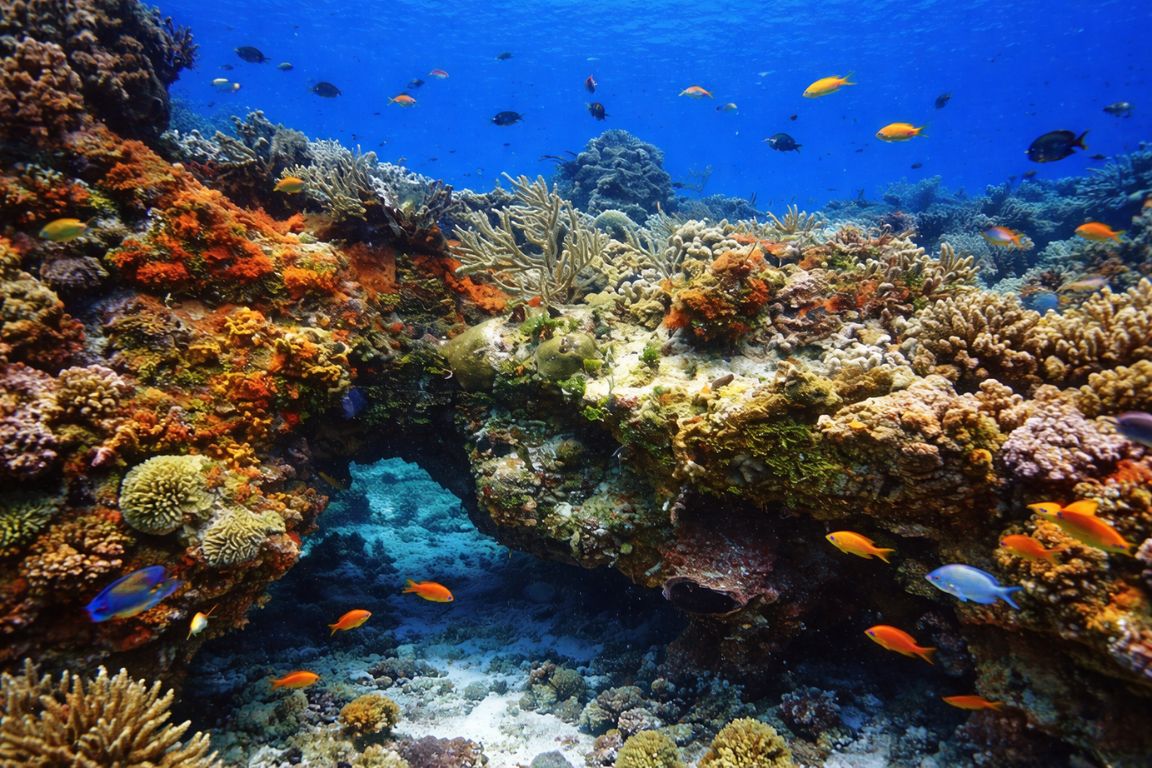
Location: Situated 20-25 minutes south of Cozumel’s main pier along the protected western shore, Palancar stretches approximately 5km making it one of the longest continuous reef sections in the entire Mesoamerican Barrier Reef system accessible within practical boat tour distances. The western shore positioning provides natural protection from prevailing easterly trade winds creating calmer surface conditions than exposed eastern areas, with consistent Caribbean current flushing clean oceanic water through reef channels maintaining the exceptional 80-100+ foot visibility making Palancar internationally famous. Multiple mooring buoys throughout the reef system enable operators anchoring without coral contact, with different buoy positions accessing dramatically different reef characters within the same named location.
Two zones: Palancar Gardens section occupies the shallower northern portion with depths ranging 8-20 feet, featuring spectacular coral garden formations including massive brain corals, towering star coral formations, and abundant sea fans creating colorful diverse underwater landscape accessible to intermediate beginners through experienced snorkelers. The deeper Palancar Wall section drops dramatically from 15-20 foot snorkeling depths to 80+ feet visible from surface, creating extraordinary vertical landscape perspective where snorkelers observe the wall descending far below while floating safely at surface, representing geological drama impossible at flat-reef alternatives. Both zones share exceptional marine life populations with sea turtles appearing throughout entire reef system, eagle rays patrolling both shallow gardens and wall sections, and nurse sharks resting under overhangs accessible from surface observation regardless of depth preference.
These animals may be encountered in suitable reef habitat, but sightings vary with conditions, location and animal behavior. No measured sighting rate is established here, and a tour name or route does not guarantee an encounter.
Current conditions: Gardens section maintains mild predictable current carrying snorkelers gently northward at comfortable pace manageable for beginners and nervous swimmers following guide instructions, with current strong enough enabling passive drift observation without continuous swimming effort. Wall section experiences moderate current requiring basic swimming confidence for comfortable maneuvering, though the drift direction follows the wall conveniently allowing snorkelers to observe formations continuously rather than fighting current to maintain position. Conditions vary daily with stronger current days covering more reef distance in same time while calmer days enable hovering above particularly interesting formations for extended observation, making guide assessment of daily conditions essential for appropriate zone selection matching group skill levels.
Ohio teacher visiting Cozumel for first snorkeling experience ever floated face-down at Palancar Gardens for approximately three minutes before large green sea turtle surfaced directly beneath her, rising unhurriedly past her mask before swimming lazily toward deeper water, later describing the moment as “one of those experiences that permanently changes how you understand the ocean.”
Columbia Reef – Eagle Ray Capital of Cozumel
Location: Positioned 25-30 minutes south of the main pier beyond Palancar, Columbia sits at the southern end of Cozumel’s primary reef zone where oceanic circulation creates conditions specifically favorable for the eagle ray concentrations distinguishing this site from all other Cozumel locations. The additional boat travel versus Palancar deters some operators from including Columbia in standard tours, making it less visited despite arguably superior marine life spectacle, with quality operators specifically routing tours here for clients prioritizing large animal encounters over proximity convenience. Depth ranges from 10-25 feet throughout primary snorkeling areas with dramatic column formations rising from sandy bottom creating the cathedral-like underwater architecture making Columbia visually distinctive from every other Cozumel reef environment.
Distinctive feature: Massive coral columns rising 15-25 feet from sandy bottom create genuinely unique geological formations found nowhere else in Cozumel, with these towering structures creating complex three-dimensional reef architecture supporting extraordinary biodiversity through varied habitat niches. The columns create dramatic compositional subjects for underwater photography with snorkelers able framing shots looking upward at column tops or downward from column heights, while the spaces between formations create natural corridors where eagle rays and nurse sharks travel creating predictable encounter positioning experienced guides exploit for consistent client sightings. Brain coral formations throughout Columbia reach exceptional sizes representing decades of protected growth under CCMA regulations, with some specimens exceeding six feet diameter demonstrating ecosystem health outcomes from consistent marine park enforcement.
These animals may be encountered in suitable reef habitat, but sightings vary with conditions, location and animal behavior. No measured sighting rate is established here, and a tour name or route does not guarantee an encounter.
Depth and current: Snorkeling depths of 10-25 feet throughout primary areas require basic swimming comfort beyond complete beginner level, with moderate current flowing between column formations necessitating ability maintaining position briefly or comfortable acceptance of drift between structures. Strong beginner swimmers completing successful Paradise Reef tour typically manage Columbia comfortably with guide assistance, though anxious beginners or weak swimmers should complete easier sites first building confidence before Columbia’s moderate conditions. The moderate current proves beneficial overall as it positions snorkelers naturally in optimal viewing angles for wildlife encounters while preventing the stagnant conditions reducing visibility at some calmer sites.
Marine life beyond rays: Large nurse sharks reaching 6-8 feet rest prominently in sandy areas between column formations, more visible and numerous than at shallower sites due to appropriate depth and habitat character. Dense reef fish populations include massive schools of French grunts creating impressive silver clouds around column bases, with queen angelfish, rock beauty angelfish, and spotted drum appearing throughout at higher densities than most alternative sites. Diverse coral species carpet column surfaces and intervening substrate with exceptional coverage percentages indicating healthy reef ecosystem, including rare black coral formations in deeper sections visible from surface snorkeling positions.
Want to know what to look for before you get in the water? Our guide to the marine life in Cozumel snorkeling tours covers everything from turtles to eagle rays to reef fish.
| Factor | Columbia Reef | Palancar Gardens | Palancar Wall |
|---|---|---|---|
| Eagle Ray Probability | Not quantified; conditions vary | Not quantified; conditions vary | Not quantified; conditions vary |
| Sea Turtle Encounters | Not quantified; conditions vary | Not quantified; conditions vary | Not quantified; conditions vary |
| Coral Formation Uniqueness | 10/10 – Columns found nowhere else | 8/10 – Classic Caribbean gardens | 10/10 – Dramatic wall landscape |
| Photography Quality | 9/10 – Columns create unique shots | 9/10 – Diverse subjects | 10/10 – Vertical wall compositions |
| Current Strength | Moderate – Basic comfort needed | Mild – Beginner manageable | Moderate – Intermediate level |
| Minimum Skill Level | Intermediate beginner | True beginner | Comfortable intermediate |
| Depth (Snorkeling) | 10-25 ft | 8-20 ft | 15-25 ft |
| Crowding Level | Low-Moderate – Fewer operators | Moderate-High – Most popular | Moderate – Shared with gardens tours |
| Nurse Shark Visibility | Very High – Sandy areas ideal | High – Under overhangs | Moderate – Along wall base |
| Best For | Eagle ray seekers, photographers, intermediate+ | Most visitors, first-timers, all levels | Wall reef enthusiasts, photographers |
Santa Rosa Wall – Advanced Drift Experience
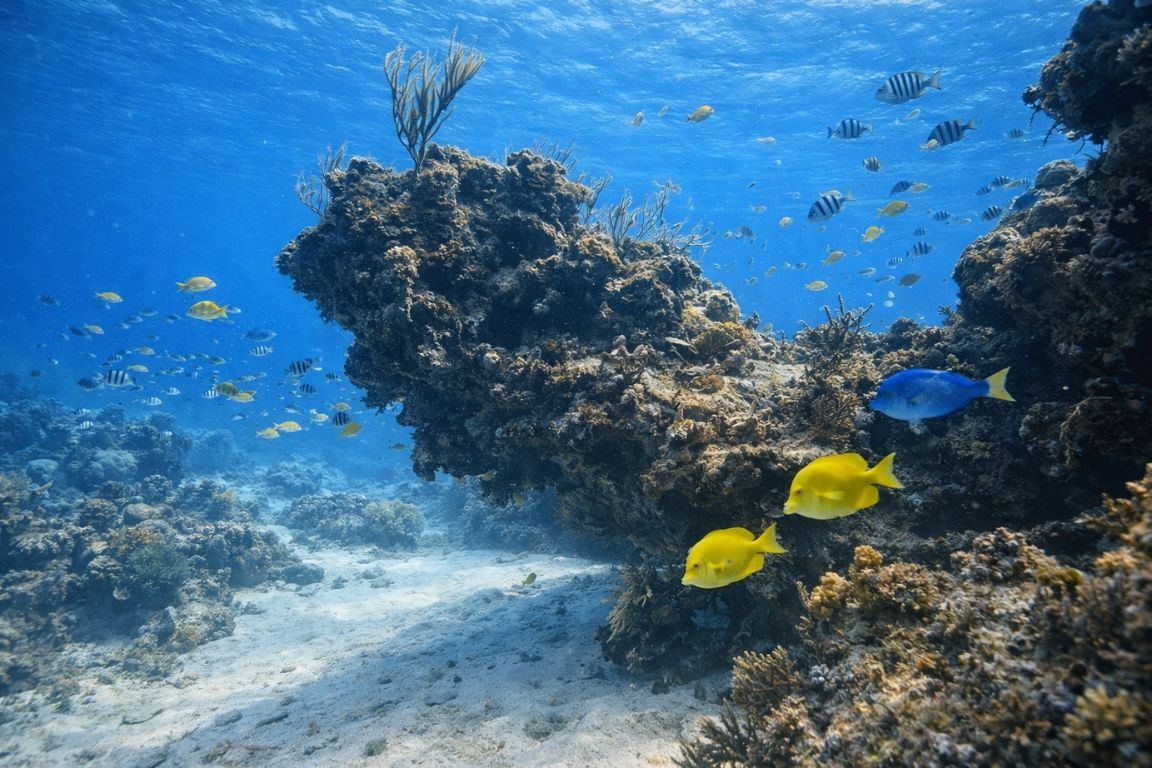
Location: Santa Rosa Wall sits 15-20 minutes south of the main pier along Cozumel’s western shore, positioned between the pier and Palancar reef system making it logistically convenient despite representing the most technically demanding snorkeling site in regular tour rotation. The wall section extends considerable length creating sustained drift experiences rather than brief current passages, with the reef dropping dramatically from 15-30 foot snorkeling depth to 100+ feet visible below creating sustained vertical landscape exposure throughout the entire drift. Multiple entry and exit points allow operators customizing drift length matching group experience levels, with shorter sections suitable for confident intermediates while full wall traversals challenge advanced snorkelers wanting maximum distance coverage.
Drift snorkeling: Strong consistent current carries snorkelers effortlessly northward along the wall face at approximately walking pace, covering substantial reef distance without swimming effort and creating natural wildlife encounter opportunities as animals appear ahead rather than requiring active searching. The current proves strong enough that attempting to swim against it tires even strong swimmers quickly, making relaxed drift acceptance rather than resistance the correct technique requiring mental comfort with controlled surrender to water movement. Guide positioning at current entry points and monitoring throughout drift ensures group cohesion, with guides managing spacing between participants and watching for individuals showing discomfort before situations require intervention.
What to see: Massive coral formations including enormous barrel sponges reaching 4-5 feet diameter, brain coral formations exceeding 6 feet across, and dramatic sea fan gardens covering wall face sections create visual complexity impossible at shallower sites with more modest formation scales. Dense fish populations concentrate along wall edges with large schools of blue chromis creating shimmering clouds above formations, black grouper reaching impressive sizes resting among coral structures, and Caribbean reef sharks patrolling outer wall sections at distances creating exciting sightings without close approach concerns. Eagle rays appear frequently along wall face where current concentrates their preferred food sources, with the combination of sharks, rays, large grouper, and spectacular formations creating comprehensive advanced wildlife experience justifying Santa Rosa’s reputation among Cozumel’s most experienced regular visitors.
Skill requirement: Intermediate to advanced snorkeling comfort proves genuinely necessary rather than conservative suggestion, as current strength makes Santa Rosa inappropriate for beginners lacking confidence in moving water, weak swimmers tiring quickly against accidental current resistance, or anxious snorkelers whose stress response overrides rational current management. The inability stopping to hover or returning against current means commitment to completing drift once entered, requiring honest self-assessment before joining Santa Rosa tours rather than discovering limitations mid-drift when guide options become limited. Completing successful Palancar Gardens tour with comfortable current management provides reasonable confidence indicator suggesting Santa Rosa readiness, while any discomfort at milder sites signals waiting for additional experience before attempting wall drift.
California dive instructor with 20 years underwater experience described Santa Rosa as “the snorkeling site I’d been waiting to find my entire career,” specifically citing the combination of powerful effortless drift, reef shark sightings, and wall formations visible below as creating sensation of flying through underwater landscape impossible to replicate at any dive destination visited across two decades.
Santa Rosa wall snorkeling is not confirmed in the reviewed itineraries. Do not book a standard reef tour expecting this specific drift.
Chankanaab Park – Best Beginner Site
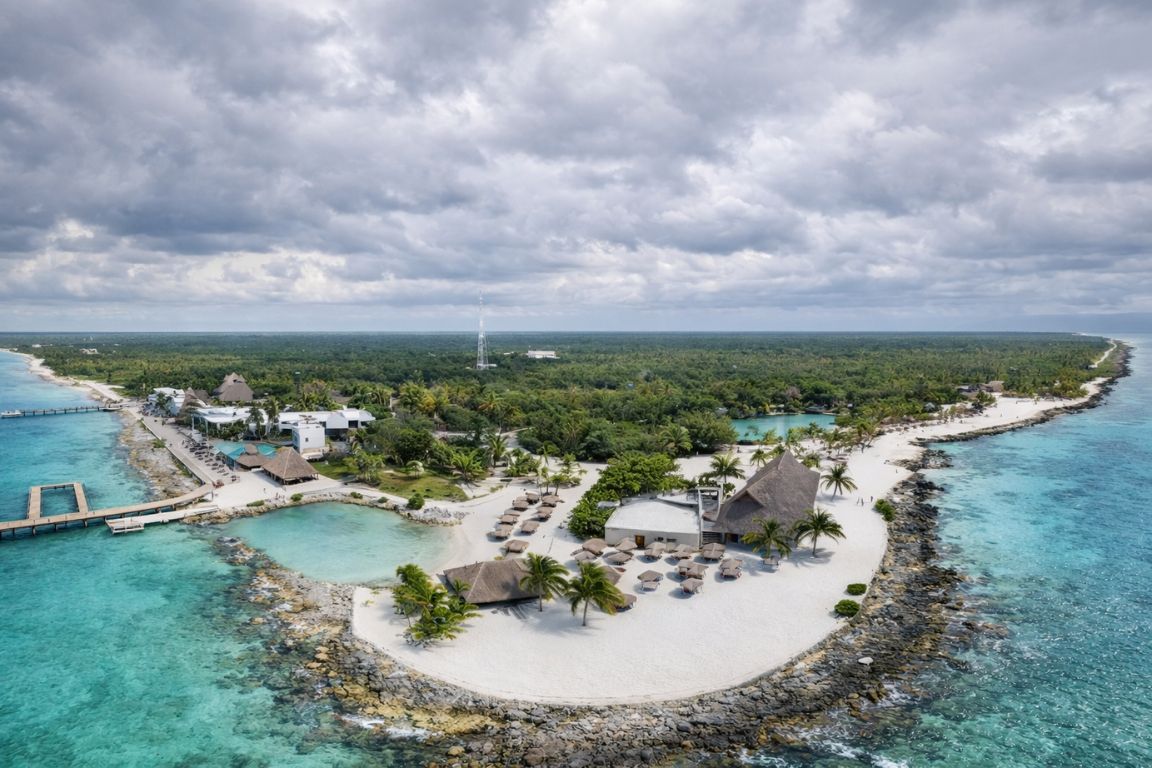
Chankanaab offers shore access, but its snorkeling area includes water too deep to stand in and rocky or stepped entries. Confirm the exact entry, conditions, supervision and accessibility before entering. Park admission alone does not establish suitability for a child or non-swimmer.
Entry fee: Approximately $24 per adult includes access to all park facilities including changing rooms with lockers, multiple restaurants and snack bars, beach chairs, freshwater showers, and full snorkeling area access without additional charges. Equipment rental adds $10-15 for mask, snorkel, and fins if not bringing personal gear, with life vest rental available at minimal cost for non-swimmers wanting complete surface support throughout exploration. The entry fee proves reasonable given facility quality compared to alternatives requiring separate equipment rental, restaurant costs, and facility fees accumulating to similar totals without equivalent comfort infrastructure.
Calm conditions: Protected cove design creates exceptionally calm water with very mild current barely noticeable to beginner snorkelers, eliminating the primary anxiety source affecting nervous first-timers at more exposed offshore locations. Depth ranges 5-15 feet throughout primary snorkeling area with gradual progression from extremely shallow entry zone toward slightly deeper reef sections, allowing snorkelers self-managing comfort by simply moving toward or away from shore based on personal confidence levels. Water clarity reaches 40-60 feet despite protected cove positioning as Caribbean current influence maintains reasonable transparency, providing genuinely good visibility even if not matching the 80-100+ foot clarity at exposed offshore sites.
Marine life: Resident sea turtles appear reliably throughout Chankanaab’s protected waters, seemingly unaffected by higher visitor numbers due to decades of habituation creating relaxed approachable animals comfortable resting near snorkelers. Nurse sharks patrol reef sections and rest under coral formations with similar regularity as offshore sites, while the enclosed environment creates concentrated fish populations with angelfish, parrotfish, and sergeant majors appearing in impressive densities around reef structures. Wildlife density and species diversity prove genuinely good despite shallower protected location, delivering authentic wildlife encounters rather than just beginner practice swimming in fish-free water.
Snorkeling involves swimming and carries drowning risk. A flotation aid does not replace swimming ability, close supervision or an operator assessment. Non-swimmers should choose dry boat viewing unless the operator explicitly confirms a suitable supervised program. Stop if distressed and signal the guide for assistance.
Bringing the kids along? I’ve broken down snorkeling with kids in Cozumel tours so you know which operators are actually set up for younger snorkelers.
| Factor | Chankanaab Park | Paradise Reef | San Francisco Beach |
|---|---|---|---|
| Access Type | Shore entry – no boat | Boat tour required | Shore entry – free |
| Entry Cost | $24 park fee + $10-15 equipment | Included in tour ($65-85) | Free + $15-25 equipment rental |
| Water Depth | 5-15 ft – very shallow | 8-15 ft – shallow | 5-20 ft – variable |
| Current Strength | Very mild – barely noticeable | Mild – predictable | Mild-Moderate – varies daily |
| Sea Turtle Probability | Not quantified; conditions vary | Not quantified; conditions vary | Not quantified; conditions vary |
| Nurse Shark Probability | These animals may be encountered in suitable reef habitat, but sightings vary with conditions, location and animal behavior. No measured sighting rate is established here, and a tour name or route does not guarantee an encounter. | Not quantified; conditions vary | Not quantified; conditions vary |
| Coral Quality | Good – Protected growth | Very Good – Healthy reef | Moderate – Some degradation |
| Facilities | Excellent – Full park amenities | None – Boat based | Basic – Beach bar nearby |
| Wildlife Density | Good for protected site | Very Good – Offshore quality | Moderate – Shore reef limitations |
| Minimum Skill Level | None – Non-swimmers welcome | Beginner – Basic comfort | Beginner – Self-assessment needed |
| Crowding | Moderate-High – Popular park | Low-Moderate – Tour groups | Low – Rarely busy |
| Best For | Families, absolute beginners, non-swimmers | Beginner boat tours, turtle seekers | Independent explorers, budget travelers |
Paradise Reef – Reliable Turtle Haven
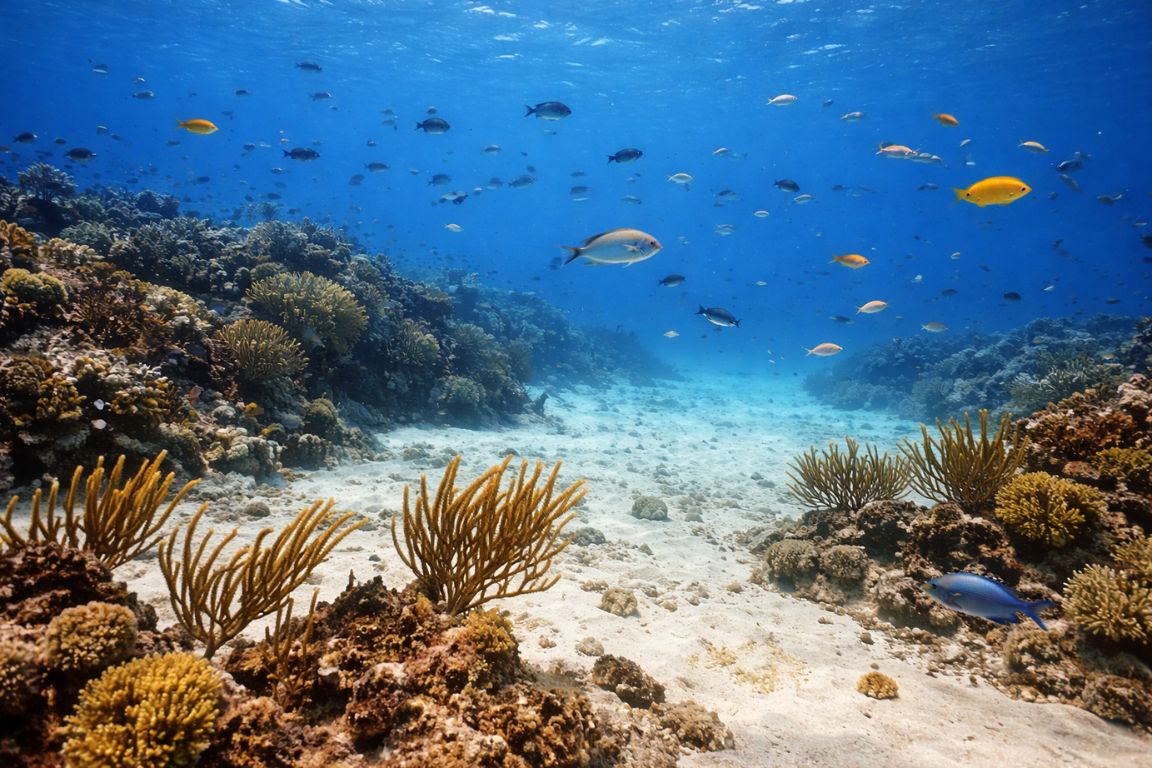
Location: Paradise Reef sits 10-15 minutes from the main pier along Cozumel’s western shore, closer than Palancar or Columbia making it practical first stop for half-day tours wanting maximum site time rather than extended boat travel. The proximity to pier also makes Paradise appropriate for visitors with time constraints including cruise ship passengers needing reliable return windows, as shorter transit reduces schedule risk while still accessing genuine offshore reef quality impossible from shore. Most snorkeling operators include Paradise as standard tour component either as warm-up first stop preceding deeper sites or standalone destination for beginner-focused tours prioritizing calm conditions over maximum formation drama.
These animals may be encountered in suitable reef habitat, but sightings vary with conditions, location and animal behavior. No measured sighting rate is established here, and a tour name or route does not guarantee an encounter.
Depth and conditions: Eight to fifteen feet throughout primary snorkeling areas creates comfortable depth range for beginner snorkelers who can see bottom clearly, maintain easy orientation, and experience close reef proximity without depth anxiety affecting confidence. Mild predictable current flows consistently in reliable direction making guide positioning straightforward, with current gentle enough allowing beginners pausing above interesting formations without significant drift requiring swimming compensation. Morning conditions prove exceptionally calm with flat water surface and minimal current before afternoon wind development, making Paradise particularly appropriate for nervous beginners whose anxiety reduces significantly in genuinely calm conditions.
Marine life: Sea turtles represent the headline encounter though Paradise delivers comprehensive reef wildlife beyond its primary reputation, with nurse sharks resting under coral ledges throughout the site and eagle rays making regular patrol appearances along reef edges. Dense tropical fish populations including large parrotfish, queen angelfish, and schooling grunts create colorful constant activity surrounding snorkelers throughout visits, with moray eels peering from crevices adding variety to the wildlife checklist. Coral coverage proves healthy with brain corals, star corals, and sea fans in good condition supporting the marine life density making Paradise consistently rewarding rather than simply conveniently located.
Tour inclusion: Paradise Reef appears in more Cozumel half-day tour itineraries than any other single site, with operators combining it alongside Palancar Gardens or Columbia depending on group experience levels and current conditions on departure day. The reliable turtle encounters make Paradise valuable as guaranteed highlight delivery early in tours when groups are freshest and most attentive, building excitement and confidence before proceeding to sites with stronger currents or deeper formations requiring more advanced comfort levels.
San Francisco Reef and Beach – Shore Snorkeling Option
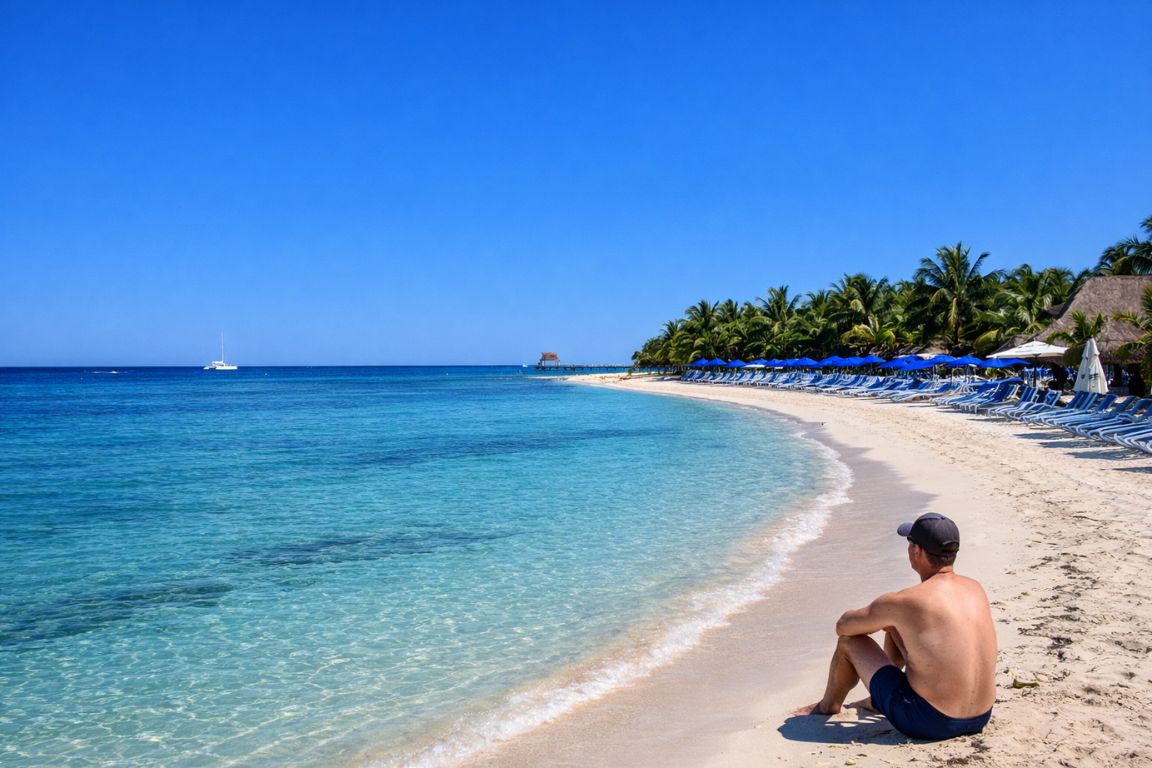
Location: San Francisco Beach sits approximately 14km south of San Miguel town center along Cozumel’s southern hotel zone, accessible via $6-8 taxi ride from the main pier without requiring advance booking or tour commitments. The beach runs along a stretch of western shoreline where reef formations begin within reasonable swimming distance from shore, making spontaneous snorkeling possible for visitors staying nearby or passing through the hotel zone during other activities.
Shore access: Free beach entry with reef accessible within 100-200 meters swimming distance from shore, requiring no payment beyond optional equipment rental ($15-25 at nearby beach clubs) for visitors bringing personal gear. The entry proves genuinely easy with sandy gradual depth increase before reef begins, though swimmers should honestly assess conditions before entering as daily variations in current and visibility affect safety without guides present providing professional assessment.
We’ve broken down shore snorkeling vs boat snorkeling in Cozumel tours so you know which option makes more sense depending on your budget and experience level.
These animals may be encountered in suitable reef habitat, but sightings vary with conditions, location and animal behavior. No measured sighting rate is established here, and a tour name or route does not guarantee an encounter.
Practical recommendation: San Francisco Beach suits supplementary snorkeling sessions extending time in water beyond scheduled guided tours rather than serving as primary Cozumel snorkeling experience. Spend mornings on guided offshore tours accessing Palancar and Columbia, then visit San Francisco Beach independently in afternoons for casual additional snorkeling at zero incremental cost.
Paso del Cedral Reef – Hidden Intermediate Gem
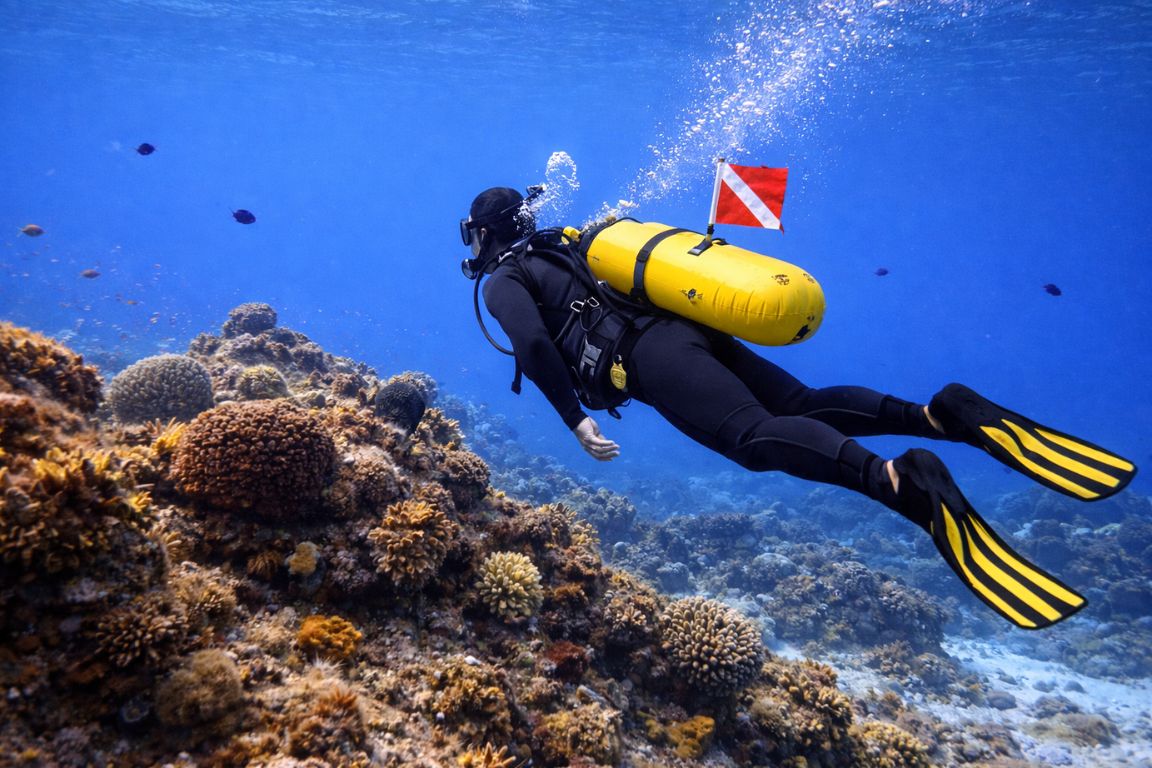
Location: Paso del Cedral occupies the reef section between Palancar and Columbia approximately 20-25 minutes from the main pier, sitting in the shadow of its famous neighbors and receiving significantly fewer tour boats despite offering genuinely comparable wildlife encounters. The positioning between two famous sites means most operators bypass Cedral entirely routing tours directly between Palancar and Columbia, creating uncrowded conditions where snorkelers often find themselves alone on reef sections that would attract dozens of boats if carrying famous site names.
What makes it special: Absence of the heavy tour boat traffic concentrating at Palancar and Columbia creates intimate reef atmosphere where wildlife behaves more naturally without constant human presence, with nurse sharks resting undisturbed in open sandy areas rather than retreating under ledges from boat noise and snorkeler activity. Experienced guides specifically recommend Cedral to clients who’ve visited Palancar and Columbia seeking fresh experiences, with the authentic less-touristed character providing contrast to famous sites where crowd management becomes part of the experience.
Marine life: Nurse sharks appear in exceptional numbers and visibility at Paso del Cedral, with multiple large individuals resting openly on sandy patches between coral formations rather than hiding under ledges as at busier sites where disturbance keeps them concealed. Healthy coral coverage supports dense fish populations comparable to Palancar with queen angelfish, large parrotfish, and moray eels appearing throughout, while eagle rays patrol reef edges with similar frequency to famous neighbors despite receiving fraction of the visitor attention.
Current and depth: Moderate current flowing through 15-25 foot depth range requires intermediate snorkeling comfort similar to Columbia, with drift direction following reef contour naturally allowing relaxed wildlife observation without fighting water movement. Current strength varies more day-to-day than at more sheltered sites, making guide assessment of conditions before committing the group particularly important for ensuring appropriate conditions matching participant skill levels.
Paso del Cedral is not confirmed as a snorkeling stop in the reviewed products. A dive itinerary is not a substitute for a snorkeling booking.
Punta Sur Reef – Dramatic Southern Tip
Punta Sur Eco Beach Park is at Cozumel’s southern end. Its beach-based snorkeling is a different outing from the deep offshore Punta Sur dive sites; confirm the exact snorkeling beach and transport included in your booking.
A Punta Sur park outing combines the southern coastal landscape with beach time and snorkeling. Deep channels, caverns and offshore dive formations are not promised by the park snorkeling packages reviewed here.
Look for reef fish and coral habitat during the snorkeling portion, subject to visibility and sea conditions. Larger wildlife sightings are unpredictable; this is not a shark-targeting or deep-wall snorkeling itinerary.
Confirm the distance to the reef, water entry and required swimming ability with your guide. A park visit can include substantial swimming and weather-dependent snorkeling; a buggy or jeep package does not make water participation suitable for everyone.
| Factor | Santa Rosa Wall | Punta Sur Reef | Deep Palancar Wall |
|---|---|---|---|
| Distance from Pier | 15-20 minutes | 30-35 minutes | 20-25 minutes |
| Current Strength | Strong – consistent | Very Strong – variable | Moderate-Strong |
| Minimum Skill Level | Comfortable intermediate | Advanced | Intermediate-Advanced |
| Wildlife Predictability | Not quantified; conditions vary | Not quantified; conditions vary | Not quantified; conditions vary |
| Shark Probability | Moderate – reef sharks | High on good days – bull sharks possible | Moderate – reef sharks |
| Pelagic Encounters | Moderate | High potential | Moderate |
| Weather Dependency | Moderate | High – cancels frequently | Moderate |
| Formation Uniqueness | 9/10 – Dramatic wall | 10/10 – Unique terrain | 10/10 – Vertical wall |
| Photography Potential | 9/10 | 8/10 – variable conditions | 10/10 |
| Tour Availability | Most operators offer | Specialty operators only | Most operators offer |
| Best For | Drift enthusiasts, advanced snorkelers | Advanced seeking unpredictable dramatic encounters | Wall reef photography, experienced |
| Skip If | Uncomfortable with strong current | Motion sensitive, beginner, reliability priority | Satisfied with Gardens section |
Snorkeling from Cruise Ship – Which Sites Work?
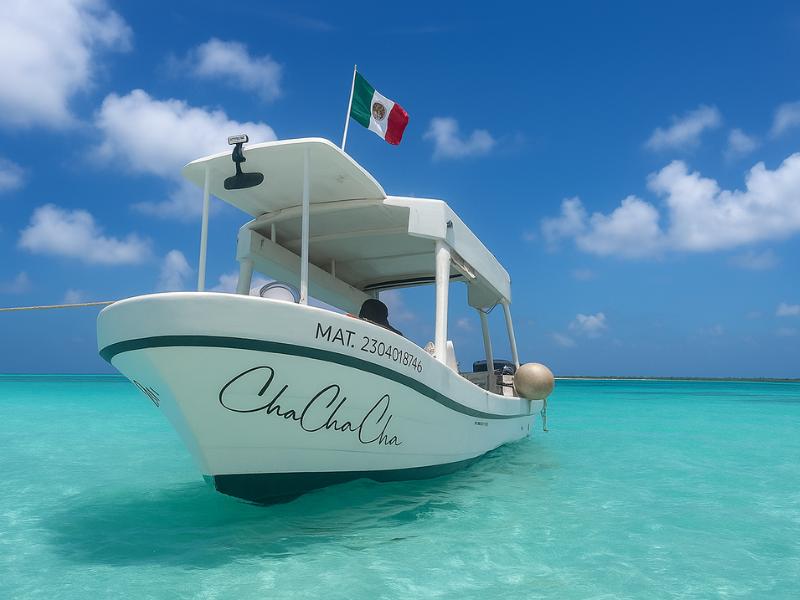
Time constraints: Cruise passengers typically have 4-6 hours ashore between ship clearance and mandatory return time, requiring realistic site selection that delivers genuine snorkeling experiences without ambitious itineraries risking missed departure. The hard departure deadline creates stress fundamentally incompatible with leisurely reef exploration, making efficient single-destination half-day tours far more appropriate than multi-site full-day formats padding schedules with risk.
For a cruise visit, verify the exact meeting point, check-in and return times against your ship’s all-aboard time. Include transfers and a substantial delay buffer, and reconcile ship time with Cozumel time. Do not assume an independent excursion includes the cruise line’s missed-ship protections; confirm any operator promise and its terms in writing.
Pier-adjacent options: Paradise Reef sits close enough for tours completing within 2.5-3 hours making it viable cruise ship option when schedule proves particularly tight, while Chankanaab Park requires only 10-minute taxi ride offering independent shore snorkeling without tour booking requirements for passengers preferring flexibility over guided structure. Both alternatives deliver genuine wildlife encounters including sea turtles and reef fish without offshore boat access times consuming significant schedule portions.
For a cruise visit, verify the exact meeting point, check-in and return times against your ship’s all-aboard time. Include transfers and a substantial delay buffer, and reconcile ship time with Cozumel time. Do not assume an independent excursion includes the cruise line’s missed-ship protections; confirm any operator promise and its terms in writing.
For a cruise visit, verify the exact meeting point, check-in and return times against your ship’s all-aboard time. Include transfers and a substantial delay buffer, and reconcile ship time with Cozumel time. Do not assume an independent excursion includes the cruise line’s missed-ship protections; confirm any operator promise and its terms in writing.
Coming in on a cruise? I’ve put together a complete guide to Cozumel snorkeling tours for cruise passengers so you can make the most of your port time.
Recommended tours by season
3 Reefs Cozumel Boat Tour with Snorkeling & Drinks
4 hours to Palancar, Columbia and El Cielo. English guide, gear, snack and drinks. Meet at Marina ASIPONA 15 minutes early; marine fee extra.
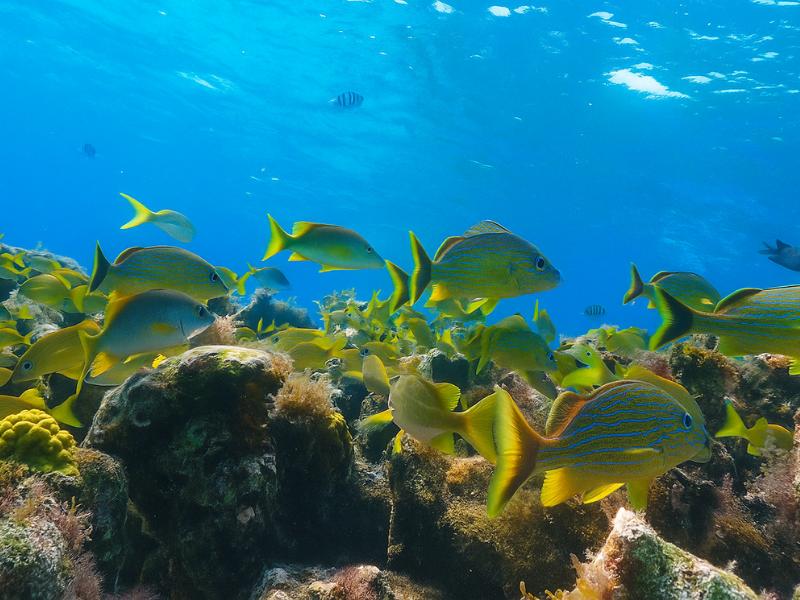
Turtle Sanctuary Luxury Catamaran Experience in Cozumel (4 Hours)
4-hour catamaran visiting the turtle sanctuary, El Cielo and El Cielito. Gear, fruit, ceviche, drinks and onboard bathroom included.
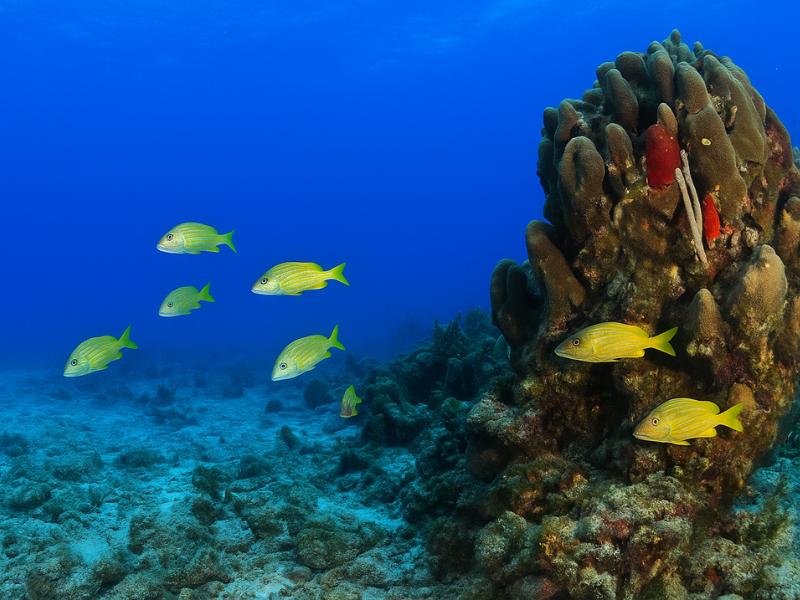
Chivis Del Mar: Coastal Snorkel Tour in Cozumel
90-minute coastal glass-bottom boat itinerary listing Dzul-Ha and Paradise reefs, with English/Spanish guide and snorkeling equipment. Meet at Chivis Del Mar, Caleta Harbor; transfers are separate.
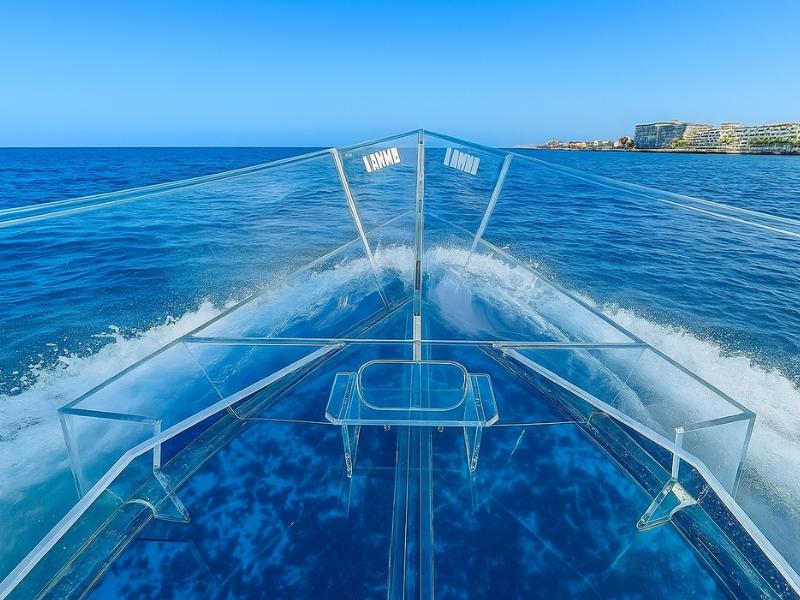
Invisible Boat Cozumel Snorkeling Adventure Tour
95 minutes. Transparent boat, guided snorkel stop, gear, water and sodas. Meet at Plaza Villamar opposite the ferry station.
Site Conditions by Season
December-April: All Cozumel snorkeling sites operate at peak capacity with optimal visibility, reliable access, and consistent conditions making this window appropriate for every site from beginner-friendly Chankanaab through advanced Punta Sur. Visibility reaches 80-100+ feet across all sites with dry season eliminating rainfall runoff and clear skies maximizing light penetration through the water column. Norte wind events December-February occasionally close exposed western sites temporarily though sheltered alternatives including Paradise Reef and Chankanaab remain accessible during most Norte periods, with full site restoration typically occurring within 1-3 days of wind event conclusion.
May-June: Slight visibility reduction to 70-90 feet across most sites remains genuinely impressive by global standards while all primary sites maintain full accessibility with fewer tour boats creating more intimate reef experiences. Whale shark day trip season beginning May adds Isla Mujeres excursion option alongside regular reef snorkeling, creating comprehensive marine wildlife itinerary impossible during dry season months. Reduced tourist pressure during this shoulder window means Palancar and Columbia receive dramatically fewer simultaneous tour boats, improving underwater experience quality despite modest visibility reduction from dry season peak.
July-August: Most sites remain accessible and rewarding with acceptable 65-80 foot visibility during normal conditions between weather events, though afternoon thunderstorm development requires operators scheduling increasingly early morning departures. Whale shark season peaks during this window with largest aggregations near Isla Mujeres, creating compelling combined itinerary of morning reef snorkeling followed by afternoon return or following-day whale shark day trip. Punta Sur becomes less reliable during July-August as increased weather variability creates more frequent cancellations at this weather-dependent exposed site, while central western sites including Palancar and Columbia maintain reasonable consistency.
September-October: Limited site access and genuinely poor conditions make this the only period where snorkeling quality drops below worthwhile thresholds at multiple sites simultaneously. Hurricane activity reduces visibility to 40-60 feet across all sites during storm periods, with surge and runoff affecting even normally excellent sites like Palancar and Columbia that maintain quality throughout other challenging months. Some operators reduce schedules entirely with certain sites including Punta Sur essentially closed throughout peak hurricane months, while remaining open sites experience frequent day-by-day cancellations creating unreliable experience delivery regardless of advance booking.
November: Rapidly improving conditions through November create week-by-week quality increases with visibility recovering toward 70-90 feet by month’s end as dry season approaches and storm activity diminishes sharply after mid-month. Spawning aggregations of Nassau grouper and snapper create spectacular marine life events at specific Paso del Cedral and Columbia sections, rewarding knowledgeable visitors timing November trips around lunar calendar for these unique biological phenomena. All primary sites accessible with increasing reliability through November, with late November conditions approaching December quality at meaningful pricing reductions making this genuinely underrated window for quality-conscious budget-aware visitors.
Planning ahead? Our guide to the best time to visit Cozumel snorkeling tours breaks down each season and what the reef actually looks like underwater.
| Site | Dec-Apr | May-Jun | Jul-Aug | Sep-Oct | November | Best Month(s) | Notes |
|---|---|---|---|---|---|---|---|
| Palancar Gardens | Excellent – 10/10 | Very Good – 9/10 | Good – 7/10 | Poor – 3/10 | Good-VG – 8/10 | April, December | Norte possible Dec-Feb |
| Palancar Wall | Excellent – 10/10 | Very Good – 8/10 | Good – 7/10 | Poor – 3/10 | Good – 7/10 | January-April | Moderate current year-round |
| Columbia Reef | Excellent – 10/10 | Very Good – 9/10 | Good – 7/10 | Poor – 3/10 | VG – 9/10 (spawning) | April, November | Spawning bonus November |
| Santa Rosa Wall | Excellent – 9/10 | Good – 8/10 | Moderate – 6/10 | Poor – 2/10 | Good – 7/10 | December-April | Weather dependent, strong current |
| Paradise Reef | Excellent – 9/10 | Very Good – 8/10 | Good – 7/10 | Moderate – 4/10 | Good – 8/10 | Year-round except Sep-Oct | Protected, reliable most months |
| Chankanaab Park | Excellent – 8/10 | Very Good – 8/10 | Good – 7/10 | Moderate – 5/10 | Good – 7/10 | Year-round | Protected cove maintains conditions |
| Paso del Cedral | Excellent – 9/10 | Very Good – 8/10 | Good – 7/10 | Poor – 3/10 | Excellent – 9/10 | April, November | Spawning aggregations November peak |
| San Francisco Beach | Good – 7/10 | Good – 6/10 | Moderate – 5/10 | Poor – 2/10 | Moderate – 6/10 | December-April | Exposed shore, weather sensitive |
| Punta Sur | Good – 8/10 | Good – 7/10 | Variable – 5/10 | Avoid – 1/10 | Moderate – 6/10 | February-May | Highest cancellation rate |
FAQ: Cozumel Snorkeling Spots Questions
1. What is the best snorkeling spot in Cozumel overall?
Palancar Gardens delivers best all-around experience combining spectacular coral formations, possible sea turtle and eagle ray encounters, suitable conditions for most skill levels, and consistently excellent visibility year-round. Columbia Reef challenges for top position specifically for eagle ray probability, though Palancar’s broader wildlife diversity and accessibility edge make it first recommendation for most visitors seeking single essential site.
2. Which Cozumel site has the most sea turtles?
These animals may be encountered in suitable reef habitat, but sightings vary with conditions, location and animal behavior. No measured sighting rate is established here, and a tour name or route does not guarantee an encounter.
3. Can I snorkel at Cozumel sites without a boat?
Yes at two locations – Chankanaab Park ($24 entry) provides best shore snorkeling experience with calm protected conditions and resident wildlife, while San Francisco Beach offers free access with reef within swimming distance. Both deliver genuine wildlife encounters though noticeably inferior to offshore boat-access sites like Palancar and Columbia where Cozumel’s world-class reputation actually originates.
4. Which sites are best for beginner snorkelers?
Chankanaab Park suits complete beginners and non-swimmers with shore entry, very shallow 5-15 foot depths, and virtually no current. Paradise Reef handles beginner boat tour participants comfortably with mild predictable conditions and high wildlife encounter rates building immediate confidence. Both sites deliver sea turtles and diverse reef fish ensuring rewarding first experiences without challenging conditions undermining comfort.
5. Where are eagle rays most commonly seen?
These animals may be encountered in suitable reef habitat, but sightings vary with conditions, location and animal behavior. No measured sighting rate is established here, and a tour name or route does not guarantee an encounter.
6. Are there snorkeling spots near the cruise pier?
Paradise Reef sits closest to the main pier at 10-15 minutes boat travel making it most time-efficient cruise ship snorkeling option. Chankanaab Park requires 10-minute taxi and no boat, providing independent option for passengers preferring shore entry. Both deliver genuine turtle and wildlife encounters within conservative time budgets accommodating mandatory ship return requirements.
7. Which site has the clearest water in Cozumel?
All offshore boat-access sites maintain comparable excellent visibility as the same Caribbean current influences the entire western reef system. Palancar and Columbia typically show 80-100+ foot visibility during December-April peak season with minimal variation between sites. Shore sites Chankanaab and San Francisco Beach show slightly reduced clarity at 40-60 feet due to proximity to shore and reduced current influence in protected areas.
8. How many snorkeling sites can I visit in one day?
Half-day tours cover 2-3 sites adequately within 3-4 hours while full-day tours visit 3-4 sites across 6-8 hours including lunch. Rushing four sites in half-day format sacrifices meaningful time at each location reducing wildlife encounter probability, making 2 properly-timed quality sites consistently outperforming 4 rushed stops regardless of total site count. Multi-day visitors benefit most from spreading different site combinations across consecutive morning half-day tours.
Glossary: Cozumel Snorkeling Sites Terms
Wall Reef vs Patch Reef: Wall reefs drop dramatically from shallow snorkeling depths to 80-130+ feet creating vertical cliff-face formations like Palancar Wall and Santa Rosa, while patch reefs form isolated shallow coral mounds surrounded by sandy bottom at consistent shallow depths like Paradise Reef and Chankanaab. Wall reefs provide spectacular depth perspective and diverse vertical habitat zones while patch reefs offer calmer beginner-appropriate conditions with less imposing depth visibility.
Drift Site: Reef location where natural current carries snorkelers effortlessly along formations without swimming effort, with Santa Rosa Wall representing Cozumel’s premier drift site through strong consistent current. Drift snorkeling covers more reef distance in same time versus static sites, creating natural wildlife encounter opportunities though requiring basic comfort surrendering directional control to water movement.
Shore Snorkeling vs Boat Snorkeling: Shore snorkeling accesses reef by swimming from beach without boat requirements, available at Chankanaab and San Francisco Beach with independent freedom at reduced cost. Boat snorkeling accesses offshore reefs 15-30 minutes from shore where Cozumel’s world-class sites including Palancar, Columbia, and Santa Rosa sit, delivering dramatically superior visibility, coral formations, and wildlife encounters impossible from shore.
Marine Park Zone: Designated protected area within CCMA jurisdiction covering Cozumel’s entire western reef system with specific regulations including no-anchor requirements, prohibited fishing, mandatory guide supervision, and reef-safe sunscreen enforcement. Marine park zoning directly produces measurable reef health outcomes visitors experience as healthy coral coverage and abundant wildlife throughout protected western shore sites.
Coral Column Formations: Distinctive vertical coral structures rising 15-25 feet from sandy bottom found exclusively at Columbia Reef, creating cathedral-like underwater architecture unlike any other Cozumel site. These formations developed over decades of protected growth under CCMA regulations, with columns supporting extraordinary biodiversity through complex three-dimensional habitat providing varied niches for diverse marine species.
Cleaning Station: Specific reef location where small fish and shrimp remove parasites from larger fish creating predictable wildlife congregation point experienced guides leverage for client encounters. Manta rays visit established Cozumel cleaning stations regularly during December-March winter months, with guide knowledge of active station locations dramatically improving encounter probability versus random reef exploration hoping for opportunistic sightings.
Pelagic Species: Open-water marine animals including whale sharks, large barracuda schools, manta rays, and bull sharks that travel through reef areas rather than residing permanently, creating unpredictable spectacular encounters when present. Punta Sur’s exposed southern position creates highest pelagic probability among Cozumel snorkeling sites though inherent unpredictability means no encounter guarantees regardless of site or guide expertise.
Site Rotation: Operator’s strategic sequence of reef locations visited during tours based on daily current conditions, group experience levels, weather patterns, and wildlife activity indicators. Quality operators adapt site rotation daily rather than following rigid predetermined sequences, selecting Columbia over Palancar when eagle ray conditions favor southern sites or substituting Paradise Reef when Norte winds make exposed sites unsafe.
Ready to Snorkel Cozumel’s Best Sites?
Palancar Gardens delivers Cozumel’s best all-around snorkeling for most visitors combining possible sea turtles, eagle rays, and nurse sharks with spectacular coral formations accessible to intermediate beginners through advanced swimmers, while Columbia Reef serves eagle ray seekers through unique cathedral formations and highest large-ray encounter probability, and Chankanaab Park provides complete beginners and non-swimmers genuine world-class wildlife encounters without boat access requirements.
Skill level determines appropriate site selection more than personal preference, with honest self-assessment preventing both underestimating experiences choosing too-easy sites and dangerous overconfidence selecting advanced drift sites beyond actual swimming comfort. Every Cozumel site from shore-accessible Chankanaab through challenging Punta Sur delivers genuinely rewarding encounters appropriate to skill level when matched correctly.
Start with the 3 Reefs boat tour to Palancar and Columbia if you want the essential sites in one morning, or a private El Cielo and Cielito charter if the route needs to follow one group’s pace. Columbia is the eagle-ray priority site, Paradise and Palancar are the turtle-priority pair, and a private El Cielo and Cielito charter is the option when the boat should be timed to one group.
Check dates for the 3 Reefs boat tour to Palancar, Columbia, and El Cielo if that site combination matches what you want from a single morning on the water.
From the guides at Cozumel Snorkeling Tours who’ve led thousands of snorkelers across every reef described in this guide, consistently watching visitors experience genuine surprise discovering Cozumel’s wildlife density and visibility exceed their highest expectations when matched to appropriate sites with proper preparation and honest guidance about what to realistically anticipate.